

July 15, 2025
Tips for Designing a Deck or Patio for All Seasons
When it comes to deck and patio designs that bring year-round functionality and beauty, great design doesn’t stop when the seasons change. With smart planning, durable materials, and thoughtful features, your outdoor area can go beyond basic deck designs—it can become a four-season retreat. Whether you’re searching for how to design a deck and patio for all seasons, exploring new decking designs, or gathering backyard designs with deck and patio elements, this guide offers expert insights and actionable deck design tips to inspire your next project.
As the go-to patio and deck builders in Pittsburgh, Morgantown, and Northern Virginia, SelectDecks is passionate about helping homeowners unlock the full potential of outdoor living—365 days a year.
1. Understanding Your Lifestyle and Needs
Before delving into the specifics of deck and patio design, it’s essential to assess your lifestyle and needs. Consider how you envision using the space throughout the year. Are you a fan of cozy winter gatherings around a fire pit, or do you prefer open, airy spaces for summer entertaining? Understanding these preferences will lay the foundation for a design that you use through all seasons.
Read Also: Porch vs Patio vs Deck - What are the Differences?
2. Build for Versatility with All-Weather Structures
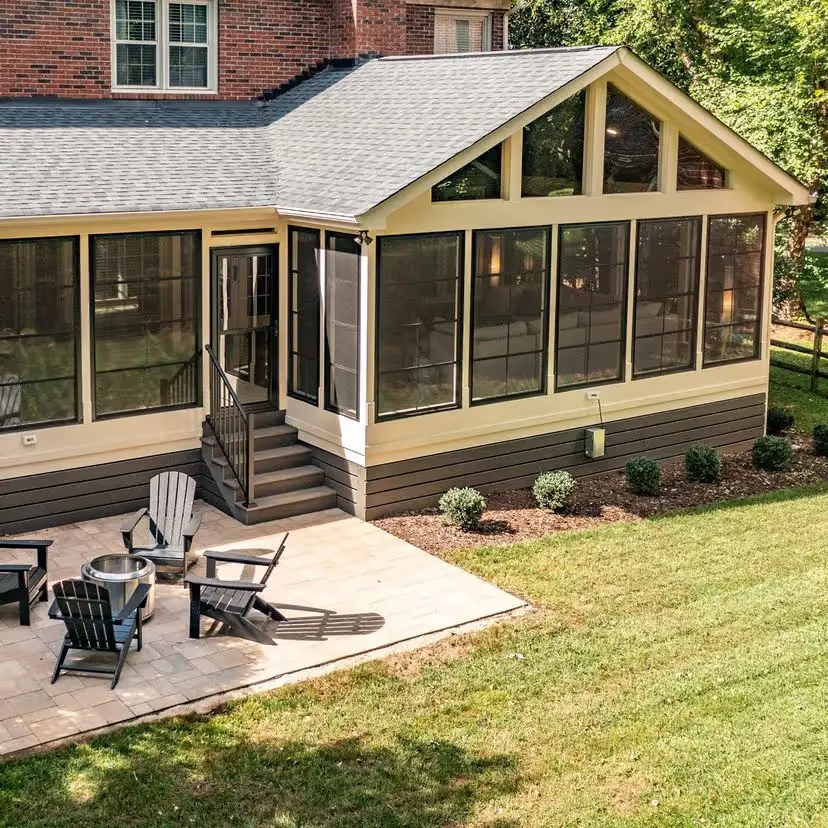
To enjoy your outdoor space regardless of weather, incorporate flexible structures like:
- 3-season rooms – Enclosed with screen or glass, ideal for spring to fall while giving you protection from the elements.
- Screened-in porches – Protect from bugs and rain while letting air flow
- Pergolas or retractable awnings – Provide summer shade and winter protection
3-season rooms and screened-in porches extend the usability of your outdoor space well beyond the typical spring and summer months. These design features also allow homeowners to relish the natural surroundings without sacrificing comfort, making it an excellent choice for those seeking a year-round retreat.
3. Create Zones That Serve Every Season
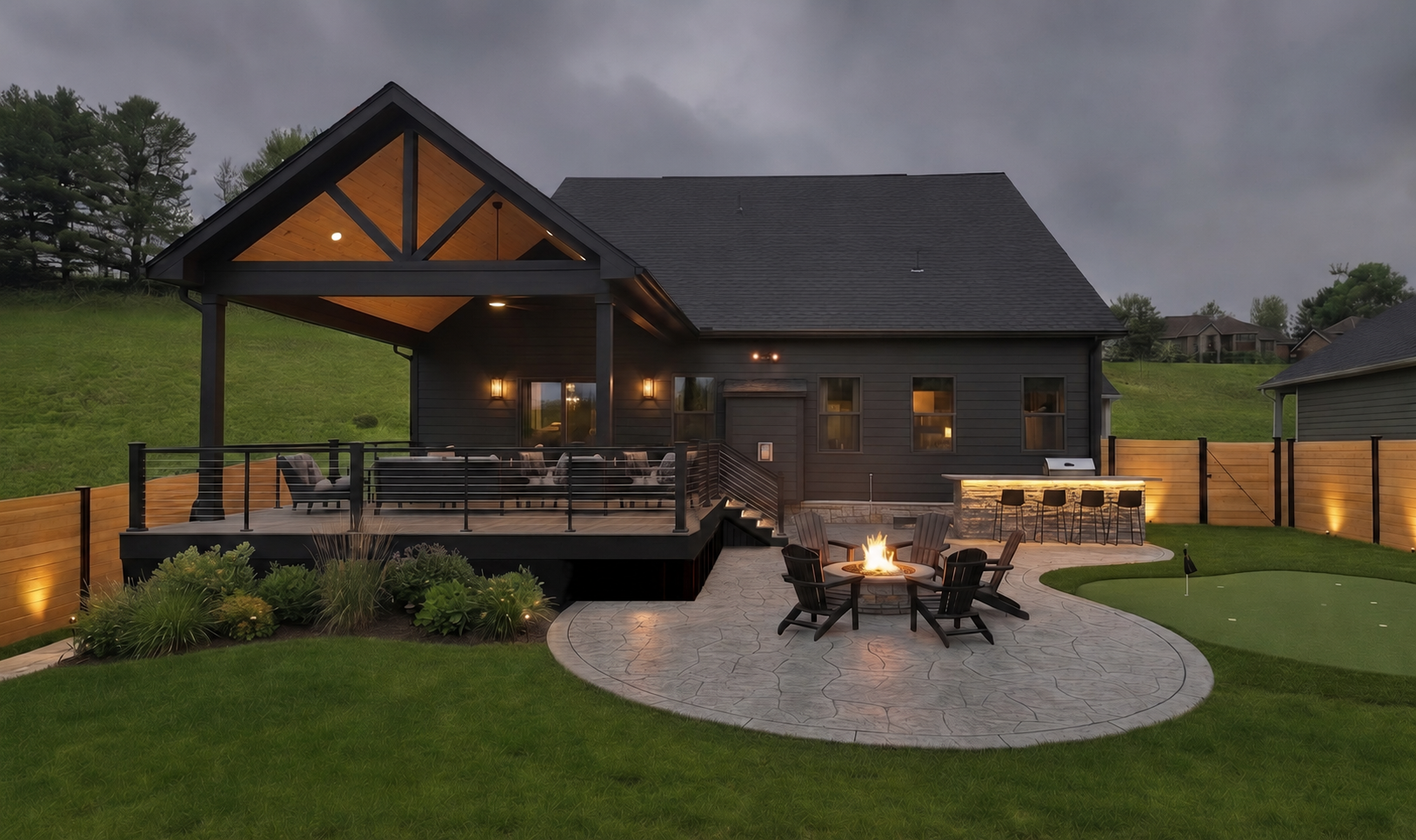
Carefully plan the layout of your deck or patio to include designated zones for different activities. Create a dining area, a lounging space, or perhaps a cozy nook with a fireplace or fire pit. Zoning ensures that your outdoor space remains functional in every season, whether you’re hosting a summer barbecue, enjoying a fall bonfire, or sipping hot cocoa on a winter evening.
4. Make Fire Features the Focal Point
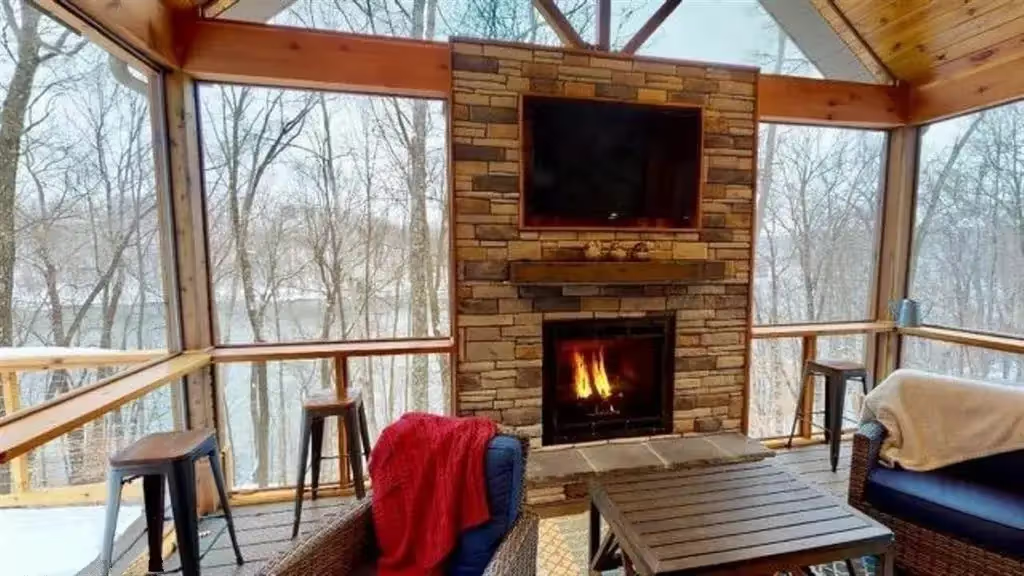
One of the most practical deck design tips is to add a heat source. Consider:
- Built-in or portable fire pits
- Outdoor fireplaces
- Infrared heaters or heated tables
They don’t just keep you warm—they create atmosphere and a natural gathering space.
Read Also: 15 Genius Outdoor Kitchen Design Ideas that will Blow your Mind
5. Choose Smart, Durable Materials
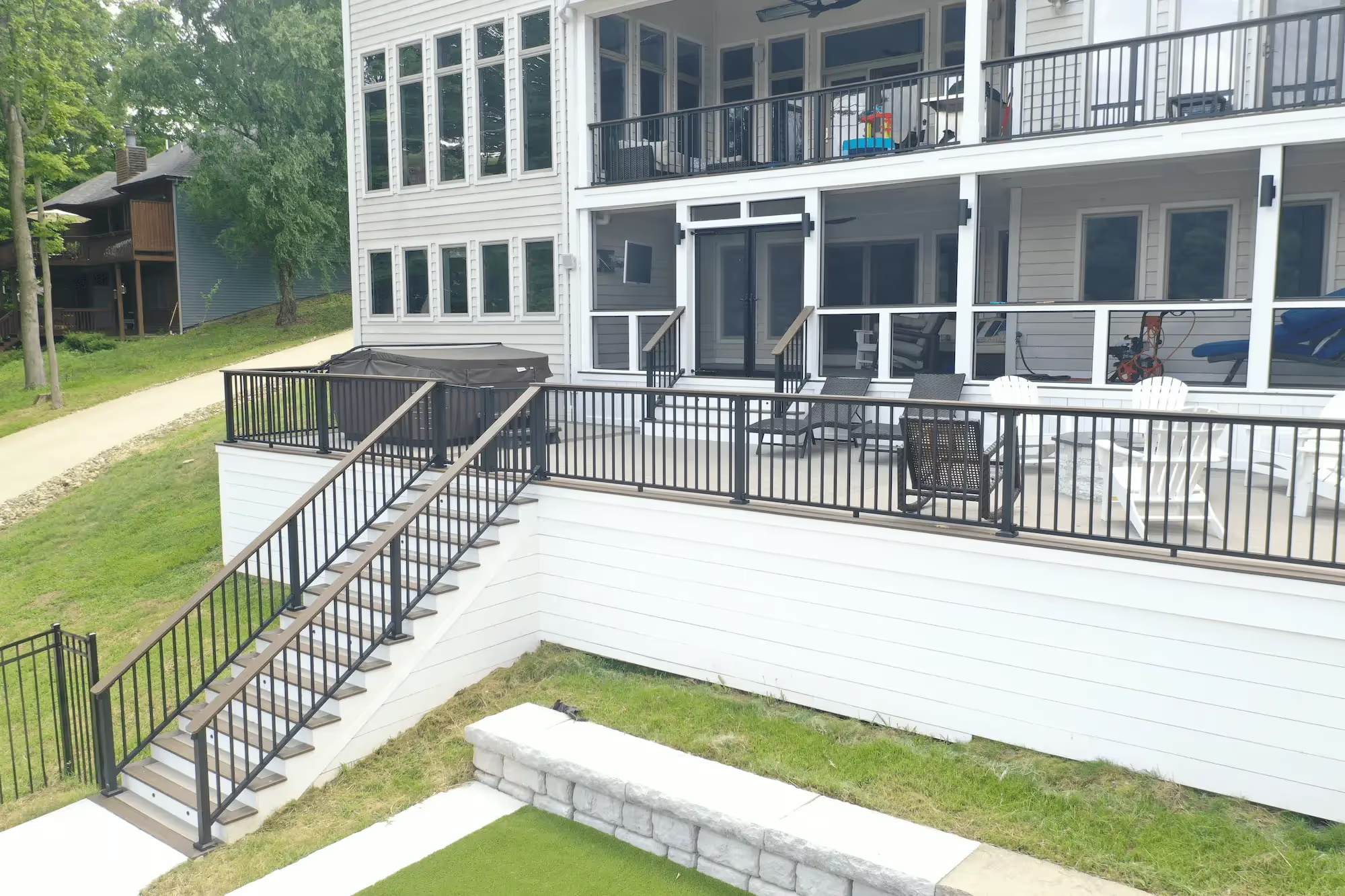
Weather can wear down low-quality materials fast. Choose products made for year-round exposure:
- Composite decking: Low-maintenance and weatherproof
- Outdoor-rated furniture: Moisture-resistant cushions and UV-stable fabrics
Investing in quality now saves time and money in the long run.
Tip: Incorporating landscaping around your deck can transform the space into a true backyard oasis. Thoughtful deck landscaping ideas—like built-in planters, natural stone borders, or layered greenery—help create a seamless transition between your outdoor living area and the rest of your yard.
6. Update Decor with the Seasons
Simple décor changes can breathe new life into your deck or patio:
- Spring – Pastel throws, wind chimes, fresh planters
- Summer – Vibrant pillows, string lights, citronella candles
- Fall – Plaid blankets, pumpkins, lanterns
- Winter – Faux fur throws, evergreen accents, warm lighting
These touches help your space feel fresh and welcoming all year.
Ready to Transform Your Backyard?
Ready to take the next step in transforming your outdoor space? The team of patio contractors and deck builders at SelectDecks is here to bring your vision to life with expert craftsmanship and designs that perform beautifully in every season.
Whether you're dreaming of a cozy, all-weather patio or a multifunctional deck that adapts to your lifestyle, we’re ready to help you build an outdoor retreat that’s as functional as it is stunning.
Checkout: Multi-Level Deck with Inground Pool Built by SelectDecks in Morgantown
Schedule your free consultation today and let’s start creating a space you’ll love year-round.
Frequently Asked Questions
1. What are the best materials for all-weather decking?
Composite decking and pressure-treated wood are both durable and low-maintenance choices.
2. Can I really use a deck in winter?
Absolutely—especially with fire features, heaters, and weatherproof furniture.
3. How much does it cost to build a year-round deck or patio?
Costs vary based on size, materials, and features. Get an estimate from SelectDecks or download our free deck and patio pricing guide.
4. What features add the most comfort in colder seasons?
Outdoor fireplaces, wind barriers, and cozy furniture make a big difference.
5. Do I need permits to add a covered patio or screened room?
Most areas do require permits in Pittsburgh, Morgantown and Northern Virginia when it comes it building decks.
6. How do I start designing a four-season outdoor space?
Start with a design consultation with SelectDecks. We'll guide you through every step.
Conclusion: Design a Deck or Patio That Works Every Season
A beautifully designed outdoor space isn’t just for summer—it’s a year-round extension of your home. From chilly fall bonfires to springtime brunches, the right deck and patio designs make every season more enjoyable.
Let SelectDecks help you create a backyard that’s functional, stylish, and perfectly suited to your lifestyle—all year long.
Check Out Our Other Blogs
October 18, 2026
Why Fall Is the Best Time to Plan a Spring Deck in Pittsburgh
We joke around the office that you can tell when tax refunds hit people's bank accounts, because that's when our phones start ringing. It happens every year. Homeowners decide they want to be outside on a new deck this summer, they call in April, and they find out the math doesn't work. If you want a spring deck in Pittsburgh, the time to start planning it is the fall.
This past year, we had homeowners in Upper St. Clair and in Mars who did exactly that. They started planning their projects in late 2025. Construction kicked off in early 2026, and both projects were finished just as the weather broke. Around here, that's usually about April 1st, give or take whatever mother nature decides to do.
Right now we're seeing the other side of it. We have projects in the pipeline that are just getting started, from homeowners who called this past summer thinking we could be there in a couple of weeks and have it done by July. That's not how projects like these work. Here's why fall planning makes the difference, and what actually happens between your first meeting and your first night on the new deck.
The Real Timeline for a Spring Deck in Pittsburgh
When we meet a homeowner for the first time, we tell them it will be about eight to ten weeks before our crew shows up at their house to build. Most people are surprised. Then we walk them back through where that time goes, and they almost always say, "Okay, that makes sense."
Here's what happens between the first meeting and the first day on site:
- Design: a couple of weeks to get the layout, renderings, and proposal right
- Material selections: a couple of weeks to choose decking, railing, trim, ceiling, and lighting
- Construction prints: one to two weeks
- Engineering: another one to two weeks, only if the project needs it
- Permitting: a couple of weeks in a normal township, and sometimes much longer
Then comes the build itself. Our average project, a deck with a roof over it, takes four to six weeks. A larger project runs about eight to ten weeks. Add patios, outdoor kitchens, outdoor fireplaces, or a pool, and you're looking at twelve to sixteen weeks. We broke down every phase in more detail in our post on how long it takes to build a deck in Pittsburgh.
Now put that on a calendar. If you call us in April, we'll tell you we can be at your house in about eight to twelve weeks. Add a four-to-six-week build, and you're finishing in July or August. Call in April, May, or June, and plan on a project that wraps up in mid-to-late summer. Call in October, and you're first in line when the weather breaks.
Spring Is When Pittsburgh Permit Offices Slow Down
The biggest reason to plan in the fall has nothing to do with builders. It's the permit office.
Every township in Allegheny County runs its own permit process, and every one of them gets hit at the same time each spring. Some of the townships we work in turn a deck permit around in about a week. In spring, all bets are off.
This year we had a permit that took eight weeks. For us, that's an outlier, so I called the office to find out what was happening so I could explain it to the homeowners. They told me they had received something like 300 permit applications in one month. That's a small office with a couple of people working in it.
It wasn't the only one. Another township took eight weeks on one of our permits this year, and when I finally got the plan reviewer on the phone, he had one simple question. I still don't know why it took eight weeks to get to that one question. That's not a complaint about the people in those offices. It's what happens when every homeowner in the region applies in the same few weeks.
Permit times are getting longer every year, and we're resetting what we tell our clients because of it. A permit submitted in November goes into a quiet queue. A permit submitted in April goes to the back of a long one. If you want the full picture on setbacks, HOA approvals, and what goes into a permit package, read our guide to outdoor living permits in Pittsburgh.
Why Fall Is the Best Time to Plan a Deck in Pittsburgh
The honest truth is that fall and winter are the best time to plan your project, and often the best time to build it. Here's why.
You get more of your builder's attention. In the fall and winter, we're running fewer projects. Our bandwidth is more focused. Your design meetings aren't squeezed between a stack of spring proposals, and your questions get answered faster.
You're not competing for permits or crews. In spring, you're competing with every other homeowner for a spot in the permit queue and on the build schedule. In the fall, you're not.
Your price is locked when you sign. At SelectDecks, once you sign on the dotted line, that's the price. If you sign in November, your project isn't exposed to whatever happens to material or labor costs before spring.
You just finished a summer in the space. Right now you know exactly what didn't work: where the afternoon sun made it too hot to sit, whether a storm sent the party inside, how far the grill was from the kitchen, whether there was ever enough room. In March, those details are a fuzzy memory. In October, they're fresh.
You can decide without a deadline. A major outdoor living project deserves real conversation, usually between two spouses and often over several weeks. In the fall, that time costs you nothing. In late spring, every week spent deciding is a week taken out of your summer.
Some homeowners want us to start right away in the fall and finish before the holidays and the snow. Others tell us there's no rush, but they want to be first on the list in spring. Both work. When a project includes concrete or pavers, we sometimes phase it: we build the deck and roof in the fall or winter, then come back at the very start of spring for the patio work.
Can You Build a Deck in a Pittsburgh Winter?
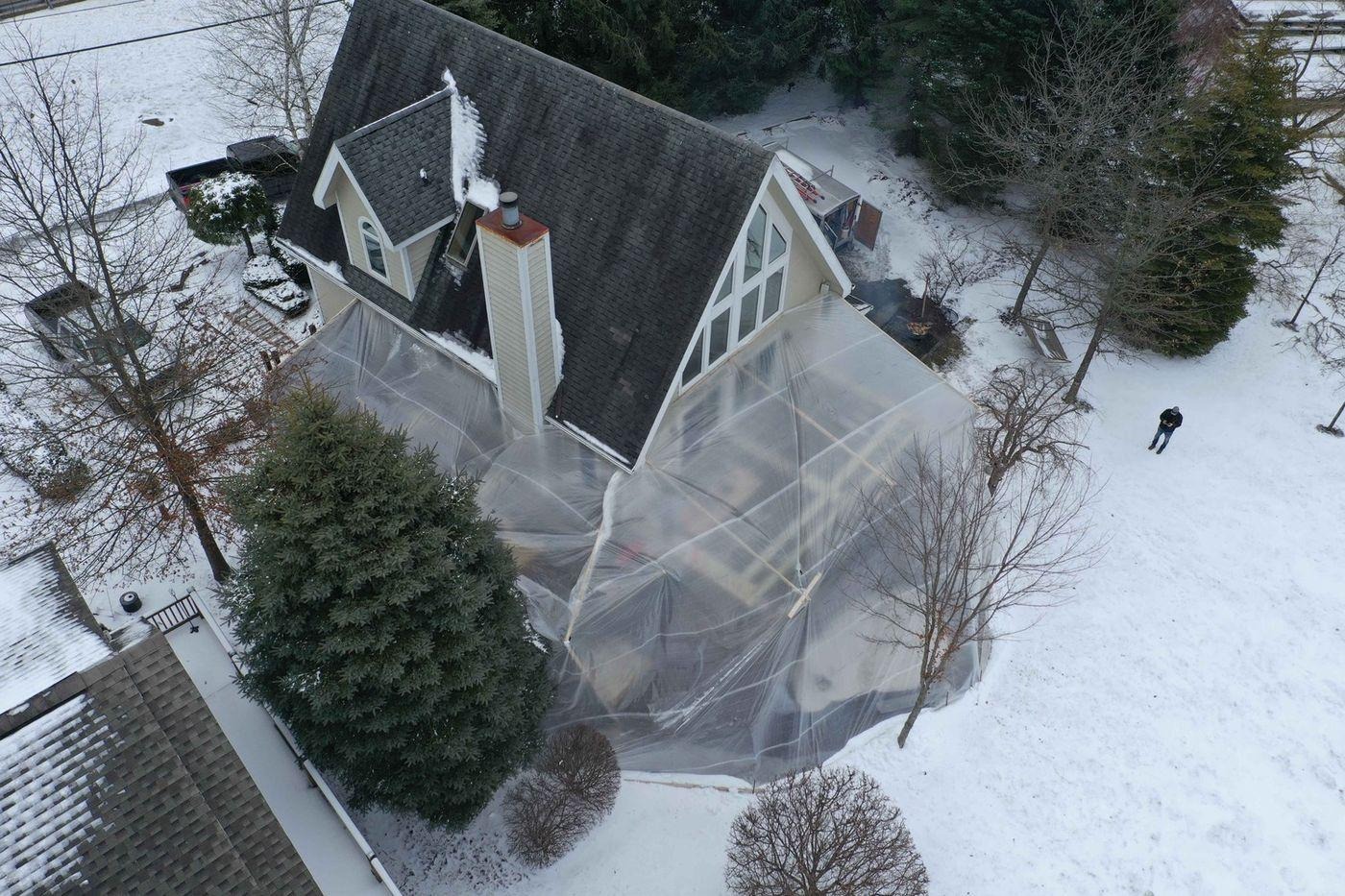
Yes. We build right through the winter. We're equipped for it, and we use specific techniques and tools that make it possible. But it's worth being honest about what winter actually changes, because most of what homeowners assume is wrong.
The Frozen Ground Myth
The most common assumption is that the ground freezes solid and nobody can pour footings until spring. In Pittsburgh, that isn't how it works. The ground here only freezes the first few inches down. That crust can be hard to get through when you're digging footings, and occasionally we've had to start a fire on site just to loosen it up. Once you're through it, it's normal digging. Frozen ground is not what stops a winter deck project in Western Pennsylvania.
What Actually Slows Winter Work Down
The real challenges are the ones nobody thinks about:
- Slopes and crew safety. A sloped yard with snow on it is slick. Working on it safely takes more time.
- Batteries. Cordless tool batteries don't hold a charge well in the cold.
- Brittle materials. Materials crack and break more easily in low temperatures.
- How products move. Composite decking like Deckorators and PVC trim like PlyGem respond to cold differently than they do to heat. How we install them in January has to account for how they'll move in July.
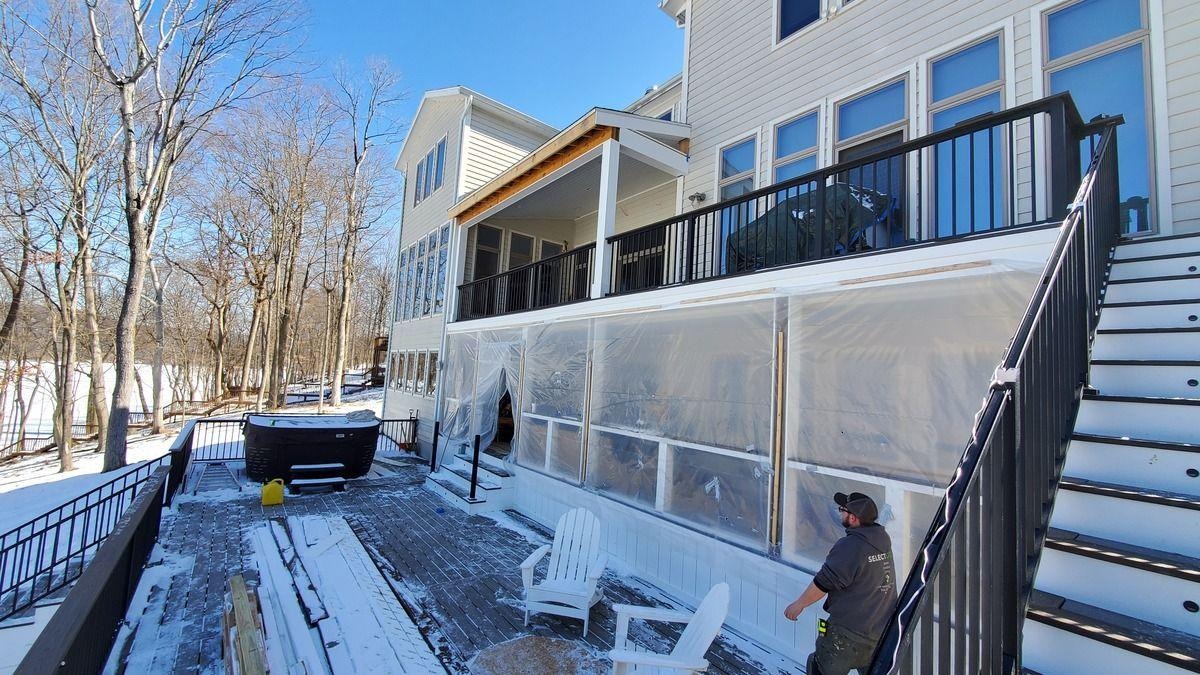
Once the footings are in and the frame is up, the snow itself isn't the big problem, because we're working up off the ground. It's the weather days you can't predict.
Materials: What Holds Up a Start Date and What Doesn't
Our core products, Deckorators decking, railing systems, and PlyGem trim, aren't the issue. We don't see lead-time problems with them. Where we do see delays is on exterior products outside the deck itself. Siding and shingles are less readily available in winter, fewer suppliers keep them in stock, and some siding lines simply stop production because there isn't enough winter demand. Custom orders can add wait time too. When your selections are made in the fall, we find those gaps early instead of discovering them the week a crew is ready to start.
The Trade-Off
In the fall and winter, you're not competing with permit offices or other projects. You are competing with the weather and with material availability. That's a real trade-off, and the only way to handle it is to talk about it up front and keep communicating along the way. Most homeowners understand that when you build in winter, mother nature gets a vote.
What Homeowners Get Wrong About Deck Timing
The biggest mistake is believing how fast a deck can be built. There's always someone out there who will tell a homeowner they can come in and do the project in a week or two. Done correctly, the same project takes three or four weeks of building, or more, plus the planning and permitting before it. There will always be someone who promises cheaper and faster. That's the number that sticks in a homeowner's head, and it's the number that wrecks their summer plans.
The second mistake is waiting until the weather is nice to start thinking about the weather being nice. By the time it's warm enough to want a deck, it's too late to have one by Memorial Day.
What to Bring to a Fall Design Meeting
You don't need a finished plan to start. Some homeowners call us and say, "I want a new deck, and I don't even know what I want it to look like or where to start." That's fine. But the more you bring, the faster design goes.
- Photos and inspiration images. More and more homeowners are using AI tools to create images of what they want, and that's genuinely helpful. Recently I met with a homeowner who had already worked out his idea with AI and showed it to me from several angles. I gave him a price range, he was comfortable with it, and the whole meeting took thirty minutes. Now he's waiting on his formal proposal. One caution: don't ask AI what your project should cost. Its estimates aren't even close.
- A budget range. It doesn't need to be exact. It helps us design something you'll actually build.
- How you'll use the space. Dining, grilling, a TV, a fireplace, room for big family gatherings, shade in the afternoon. Bring the list of what didn't work this summer.
- Any earlier plans. Some homeowners already have drawings from a designer for a project that never got started. Bring them.
- Your property survey and HOA details. We need the survey for the permit site plan, and an HOA adds its own approval step.
Frequently Asked Questions
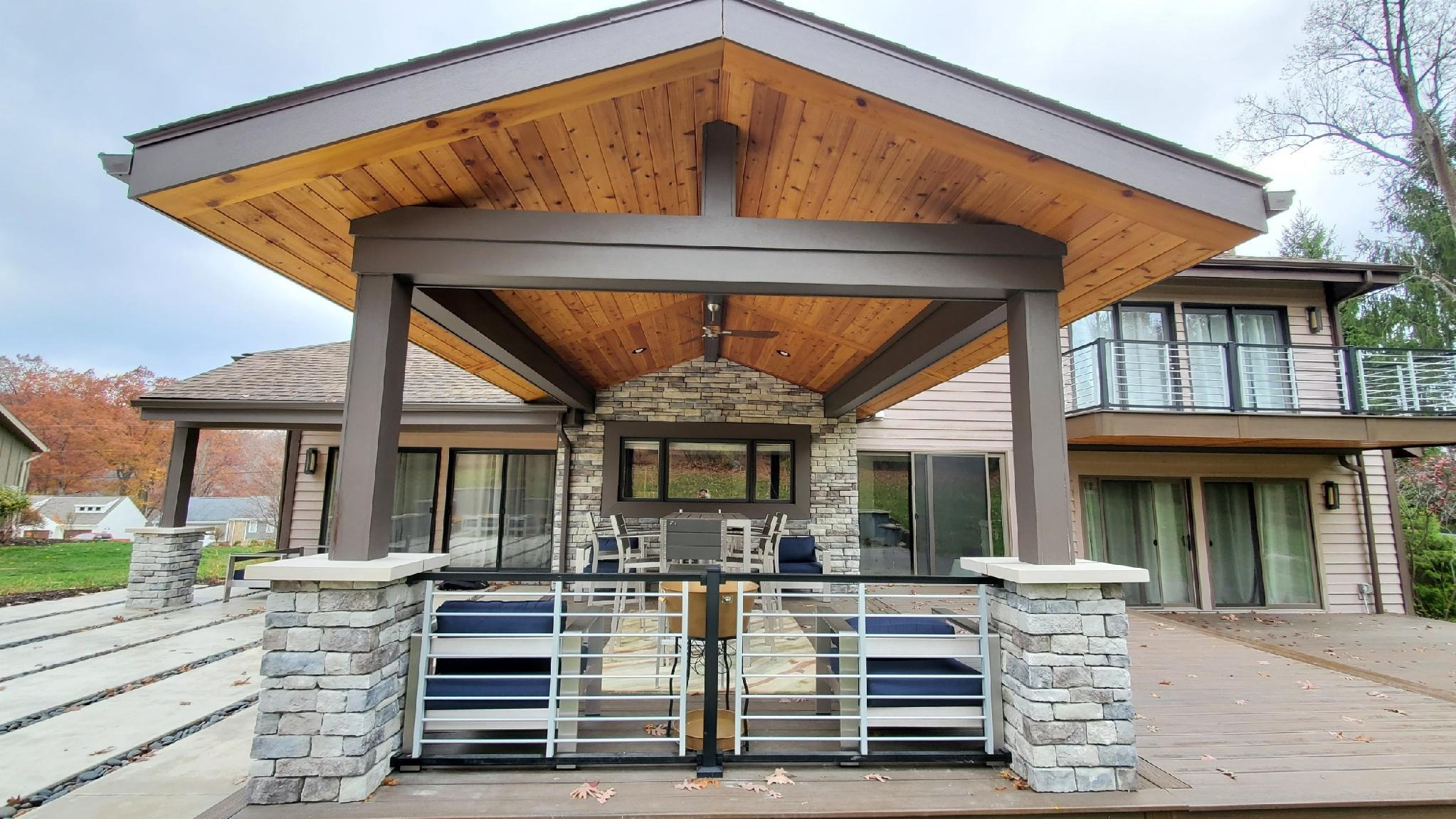
Start Planning Your Spring Deck This Fall
The homeowners in Upper St. Clair and Mars who were outside on their new decks this April weren't lucky. They started the conversation the fall before.
If you want a spring deck in Pittsburgh, schedule a site visit this fall. We'll spend one to two hours on your property, walk through what you want and how you'll use it, and put together a complete proposal with layouts and renderings. Once you sign, your price is locked, and permits, drawings, and selections move forward while the permit offices are quiet. When the weather breaks, your project is ready to go.
Visit our Pittsburgh outdoor living page to schedule your site visit.
Different Process. Different Standards. Different Results.

July 24, 2026
Fixed Price vs. Cost Plus: Understanding Your Deck Contract Before You Sign
Two contractors can hand you proposals for the same outdoor living project, and the numbers on the last page can be the least important difference between them. What matters more is the contract structure underneath: whether you are signing a fixed price contract or a cost plus agreement. That single decision determines who absorbs the cost when something on your project does not go according to plan. And on a construction project, something always does not go according to plan.
Most homeowners never ask which one they are signing. They compare bottom-line numbers, pick the one that feels reasonable, and find out how the contract actually works six weeks into construction when an invoice arrives that they were not expecting.
Here is how the two structures work, what each one means for your risk, and what has to be true about a builder before a fixed price is even possible.
Fixed Price vs. Cost Plus: The Two Ways Contractors Price Work
Cost plus means you pay the actual cost of the project plus an agreed percentage on top. Materials, labor, subcontractors, and equipment get billed as they are incurred, and the builder adds their margin to that total. It is sometimes structured with a not-to-exceed ceiling, and it is closely related to time and materials pricing, which bills labor hours and material costs the same way. The number you see at the proposal stage is a projection, not a commitment.
Fixed price means the number in the proposal is the price of the project. If material costs climb, if the crew takes longer than planned, if the builder miscalculated something during planning, the price does not change. The only thing that moves the number is a change you request.
The distinction sounds academic until you follow it through to a real situation. Under cost plus, if a crew takes three extra days to frame a deck, those three days get billed to you. Under a fixed price, those three days come out of the builder's margin.
That is the entire difference, and it is worth sitting with: the contract structure decides who carries the risk of the unknown. It is also one of the reasons two proposals for the same project can land tens of thousands of dollars apart, which we covered in more depth in Why Deck Prices Vary So Much and Getting 3 Estimates is a Bad Idea.
Why We Do Not Write Cost Plus Contracts
Every SelectDecks project is fixed price. We give the homeowner a price, and that is the price unless they change something.
Our position on cost plus is straightforward. It removes the builder's incentive to control costs. A builder billing cost plus can order more material than the job needs, run more labor hours than the job requires, and every one of those decisions increases what they get paid. The structure rewards inefficiency.
The second problem is comprehension. Almost no homeowner has a working understanding of construction markup, margin, burden rates, or how overhead gets allocated to a job. A cost plus contract asks them to audit numbers they have no framework for evaluating. What you get is a homeowner who is confused, and a confused homeowner starts losing trust in the person handing them invoices. That is a bad way to spend four months together.
The Honest Trade-Off
A fixed price will often look higher on paper than a cost plus proposal for the same project, and there is a legitimate reason for it. When a builder absorbs the risk of overruns, that risk gets priced into the number. You are paying for certainty, and certainty is not free.
You also give up some visibility. A fixed price proposal does not show you what the framing cost or what the demo cost. If line-item transparency matters more to you than price certainty, cost plus gives you that, and you should go in knowing you are trading one for the other.
We think price certainty is the better trade for a homeowner. But it is a trade, and anyone who tells you a fixed price has no downside is selling you something.
What a Fixed Price Actually Requires From the Builder
A fixed price is only as good as the work that happens before it gets written. Any contractor can put one number on a page. The question is whether that number is built on anything.
Ours comes from unit costs. Square footage, linear footage, and per-unit pricing for the components of a project, all of it built from cost data we have tracked across hundreds of completed projects. Custom elements like outdoor kitchens and outdoor fireplaces get priced individually, because what a homeowner selects for a countertop or a finish materially changes the cost. Appliances are priced by the appliance. Overhead and profit are built into the unit price rather than tacked on at the end.
That data is the reason we are comfortable committing to a number. We know what a covered deck costs us to build in Pittsburgh because we have built them, tracked the actual costs afterward, and corrected the pricing when we were wrong.
This is where most of the industry falls down. A large share of contractors price off rules of thumb inherited from someone else: double the material, triple the labor, whatever the local version of that is. They do not track job costs against the estimate afterward, which means they never find out whether they made money on a project or lost it. A fixed price from a builder who does not know their own costs is not a commitment. It is a guess with confident punctuation, and it will turn into change orders once the job is underway.
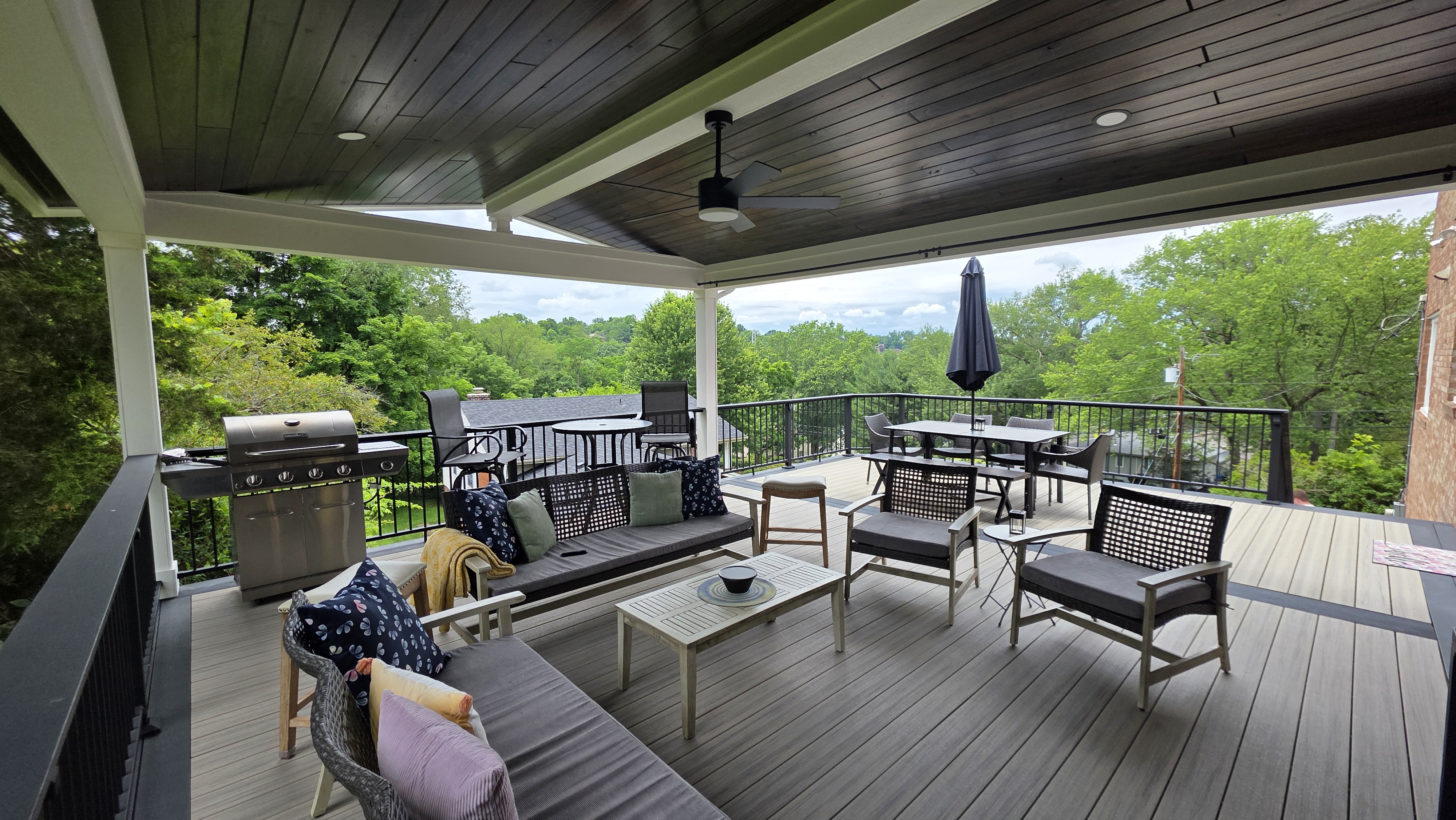
Proposal, Not Estimate
We do not issue estimates or quotes. We issue proposals.
The difference is not semantics. An estimate is an informed guess based on a walk-through and a conversation. A proposal is a professionally drafted scope of work that lists each item and service being performed, along with design work, engineering where the project requires it, layouts, and renderings. Every homeowner gets a complete proposal within seven to ten business days of the site visit.
If a builder hands you a number on a business card at the end of a twenty minute visit, you have an estimate, whatever they call it. Ask what happens to that number when they get into the details. It is one of several questions worth asking before you hire anyone, and we put together a fuller list in 10 Questions You Should Be Asking Your Pittsburgh Deck Builder.
Contingency, Disclosed Upfront
Every budget we prepare includes a contingency fund. It exists for the discoveries that construction produces: a ledger board rotted into the rim joist that nobody could see until demolition, ground hard enough to require a jackhammer, the conditions you cannot verify from the surface.
Homeowners know the contingency exists before they sign, because we explain it during preconstruction. When we draw from it, we tell them and we document it. What does not happen is a phone call asking for more money or a schedule extension because the site surprised us.
Change Orders: What They Are and Why Ours Are Rare
A change order is a written modification to the original scope of work, with a price attached, signed by both parties before the work happens. That is the whole concept. The reason change orders have a bad reputation is not the mechanism. It is how often they get used to correct a bid that was written light on purpose.
Here is the rule that follows directly from a fixed price contract: if the price is fixed, the only legitimate change order is one the homeowner initiates.
We have never issued a change order to a homeowner for something we got wrong. Not once. If our budget was short, if our crew ran long, if we missed something during planning, that cost is ours.
Two Projects Where That Cost Us Real Money
Our system had five eighths inch PVC trim budgeted across several recent projects. Every supplier we work with was out of it, and we could not source it anywhere. The only alternative was three quarter inch PlyGem trim, which runs twenty to thirty percent more. We bought the three quarter inch, absorbed the difference, and the homeowners paid what their proposals said they would pay.
Decking, railing, trim, and ceiling material are normally the most stable pricing on a project, because we buy them from the same suppliers on every job at pricing we have established over years. The exception is exactly what happened above. When a supplier runs out and we have to source from someone we do not typically work with, we are bound to their pricing instead of ours, and on premium materials like decking that difference can run into thousands of dollars on a single project. That gap is ours to absorb.
The second one is worse, because the mistake was ours at the top. On a recent project that included an outdoor kitchen, we told the homeowner appliances were included in the budget. Then the appliances never made it into the budget before the proposal went out. We bought them anyway. It was a few thousand dollars, and the homeowner never heard about it.
That is not generosity. We told them a price that included appliances, they accepted a proposal on that basis, and standing behind your word is the minimum standard for calling yourself a professional. We now run every budget through a second reviewer specifically so that mistake does not repeat.
Labor overruns work the same way. Over the years we have absorbed a substantial amount of money in labor that ran past what we budgeted. It is a real cost of operating this way, and it is not the homeowner's problem.
What Happens When the Homeowner Does Want a Change
Homeowner-initiated change orders are rare on our projects, because preconstruction is thorough enough that most decisions are already made before anyone breaks ground. They are rare enough that when one comes through, we have to slow down and make sure we are recording it correctly.
When one does happen, the process is simple. The homeowner requests the change. We write it up in our project management system with the specific scope, we price it, and it goes to them for review. They approve and sign inside the system, and both sides keep permanent access to the record. Nothing gets built off a verbal agreement or a text message.
We require one hundred percent payment on change orders at the time of approval. Two reasons. We have been burned before by reaching the end of a job with a stack of change orders and a dispute about what was authorized. And paying it in full keeps the original payment schedule intact rather than forcing a recalculation of percentages against a moving contract total. It is cleaner for us and cleaner for the homeowner.
Occasionally a homeowner asks for something mid-project that is custom enough that we cannot price it precisely on the spot. In that case we give them a range and let them decide whether they are comfortable with it. If we say three to five thousand and it comes in at eight, the overage is ours. Even a range is a commitment.
One Price, One Number: How We Handle Transparency
Here is where we differ from most of the market, and it surprises people: we do not provide line-item pricing.
Homeowners receive one price for the project. Not a cost for demo, a cost for framing, a cost for trim work, and a cost for railing. One number for the scope described in the proposal. If a project has genuinely separate phases, a deck and a patio, we will price those separately so a homeowner can decide what to build and when. Within a phase, we do not break it apart.
Two reasons.
The first is that a line-item list is not actually informative. Construction pricing is interdependent. Pull one item out and the numbers around it change, sometimes significantly, because crew mobilization, sequencing, and material orders were built around the whole. A homeowner reading a line item as a standalone price is reading something that is not true.
The second is that an itemized list turns a proposal into a shopping list. It invites the conversation where a family member is going to handle the demo, or a friend can do the concrete. We are accountable for the entire project, including the parts underneath the finished surface, and we cannot warrant work we did not perform or supervise.
Transparency is About Access, Not Itemization
What we do give homeowners is complete access. Every project runs through a client dashboard, and the homeowner sees essentially everything we see: the proposal, the schedule, permit documentation, our licenses and insurance certificates, invoices, change orders, progress photos, renderings, layouts, surveys, and every document produced during preconstruction. The only thing they do not see is our internal team communication.
All project communication runs through that one channel. We tell homeowners directly not to text us and not to email us, because messages in those channels get buried and lost. Inside the system, a message is visible to multiple people on our team at once, so a request does not depend on one person remembering it. When a homeowner mentions they are thinking about changing something, more than one set of eyes sees it, and someone makes sure it gets addressed properly.
That is what transparency actually means on a construction project. Not a spreadsheet of trade costs, but a permanent, timestamped record that both parties can see, where nothing important lives in someone's memory or a text thread.

Questions to Ask Before You Sign Anything
Whatever builder you choose, these four questions will tell you what kind of contract you are signing.
1. Is this a fixed price or an estimate? Ask directly, and ask what the document is called in the contract. The answer determines everything else.
2. What specifically triggers a change order? If the answer includes anything about the builder's own errors, cost increases, or labor overruns, you do not have a fixed price, regardless of what the proposal looks like.
3. What is excluded from this scope? Exclusions are where a low proposal hides. Get them in writing.
4. How do you handle unforeseen site conditions and weather delays? Both are real in Western Pennsylvania, where freeze-thaw cycles, wet springs, and frozen ground are ordinary parts of a construction calendar. A builder who has thought about it will have a specific answer involving contingency and schedule. A builder who has not will tell you it usually is not a problem.
The Bottom Line
A contract's structure is a statement about who the builder thinks should carry risk. Cost plus places it on the homeowner. Fixed price places it on the builder, and it only works if the builder knows their costs well enough to survive being wrong occasionally.
Ask which one you are signing before you sign it. Ask what triggers a change order. And be skeptical of a fixed price from a contractor who cannot explain how they arrived at the number, because a price that is not built on tracked cost data will not hold once construction starts.
If you are planning an outdoor living project in the Pittsburgh area and you want a fixed price built on real numbers, schedule a site visit with SelectDecks. We will spend one to two hours on your property, walk through every option with you, and deliver a complete proposal with layouts and renderings within seven to ten business days. See our custom deck building work in Pittsburgh or contact us to get on the schedule.
Different Process. Different Standards. Different Results.
June 24, 2026
Everything You Need to Know About Outdoor Living Permits
Most Pittsburgh homeowners who call us about a deck project ask about cost, materials, and timeline. Permits come up eventually, usually when we bring them up. The typical assumption is vague: they probably need one, it probably takes a while, and it's probably a headache. They're right on all three counts. At SelectDecks, we handle the entire permit process ourselves so homeowners don't have to think about any of it, but understanding what that process involves helps you ask better questions and choose the right contractor in the first place.
Deck permits in the Pittsburgh metro area vary township to township, can depend on what you're building and where on your property it goes, and can either run smoothly or completely derail a project depending on how they're handled. We've seen both. This post covers what the permit process actually involves, what homeowners most commonly get wrong, and why the way your contractor handles permitting is one of the most revealing things about how they run their business.
If you're still figuring out how permitting fits into the broader project timeline, our post on how long it takes to build a deck in Pittsburgh covers the full picture from approved proposal to final inspection.
We Handle the Permit. Here’s Why That Matters.
Contractors handle permitting in three different ways, and the approach they take tells you a lot about how they operate.
Some contractors pull and manage the permit entirely: drawings, application, fees, inspections, everything. The homeowner supplies their property survey and otherwise stays out of it. That's how we handle it at SelectDecks. Permitting is included in the scope of the project, and the homeowner doesn't have to show up for inspections, manage paperwork, or pay a separate fee. The only thing we ask for is their property survey, which we need to prepare the site plan showing where the structure is going to sit on the lot.
Other contractors will do the permitting work but charge a separate line item for it, anywhere from a few hundred to a couple thousand dollars depending on the company and the project scope. That's not unreasonable, but it's a cost worth clarifying before you sign a contract.
And some contractors tell the homeowner to handle permitting themselves: get the permit, schedule and be present for inspections, coordinate with the municipality, and sign off on everything. If you've never been through that process, it's more involved than it sounds, and the risk of something going wrong lands squarely on you, not the contractor.
When you're evaluating companies, ask directly: who handles permitting, what's included, and what does the homeowner need to do? The answer should be clear and specific. Vague answers here usually mean the process is vague too.
What Goes Into a Pittsburgh Deck Permit Package
A complete permit submission in the Pittsburgh area includes several components. The municipality needs to know what's being built, where it's going, and that it meets structural and zoning requirements. In practice, that means:
• Permit drawings (construction drawings). These are detailed blueprints showing what's being built: dimensions, materials, structural connections, footing specifications. We produce these in-house as part of our pre-construction process.
• Site plan. This is typically the homeowner's property survey, marked up to show where the new structure will be located on the lot. The township uses this to verify setback compliance, which is covered in the next section.
• Completed application. Standard information: project description, estimated cost, contractor license number, homeowner information, and the scope of work.
• Renderings. We include 3D renderings in our permit packages to give the reviewer a clear visual of what the finished project looks like. No municipality requires them, but reviewers tend to appreciate them and they can help move the process along.
Once all of that is assembled and submitted, the municipality reviews it against their local building code and zoning ordinances. If everything is in order, you get an approved permit. If something is missing or unclear, the application comes back. Depending on your relationship with the township, that can mean a quick phone call to clarify or restarting from the back of the queue.
Setbacks: The Number That Changes Everything
A setback is the required minimum distance between a structure and a property line. Every municipality has them. They're the reason your neighbor can't build a deck right up to your fence line, and they're the first thing we check when a homeowner tells us where they want to build.
Side setbacks across Pittsburgh tend to run in the 10 to 15-foot range. Rear setbacks are less consistent; we've seen them as low as 50 feet and as high as 100 feet depending on the township. That's a significant spread, and it's why you can't assume your setbacks match what a neighbor in a different municipality experienced.
What complicates this further is that decks often get treated differently than enclosed structures. We did a project in Upper St. Clair where the side setback was 15 feet, but the township's code specifically allowed a deck to encroach 6 feet into that setback. That kind of carve-out isn't unusual, but you'd never know it existed unless you or your contractor actually read the local ordinance.
When the Project Is Too Close to the Line
If a planned project falls within the setback, the project doesn't automatically die. The option is a variance, a formal request to the municipality to allow construction closer to the property line than code normally permits. Variances require a separate application process, sometimes a hearing, and additional time. They're not guaranteed.
In most cases, we work around setback issues during design before submitting anything. A stair landing that would violate the setback gets repositioned. A deck that pushes too far toward the rear property line gets adjusted. These are design conversations, not construction surprises, as long as the site is measured correctly and the local code is read carefully during planning.
How Long Permit Approval Actually Takes in Pittsburgh
Under normal circumstances, with a complete package submitted to a municipality we work with regularly, we're looking at one to three weeks for approval. The fastest turnaround we've seen is about a week. Three weeks is more typical when things go smoothly.
The word "smoothly" is doing a lot of work in that sentence. Two things affect approval speed more than anything else:
The Completeness of Your Submission
An incomplete package means a rejection, and a rejection means going to the back of the queue. If the reviewer has a question about something in the drawings, what happens next depends on whether they know you. Municipalities we work with regularly will call us directly, note the question on the file, and tell us to address it during construction, no resubmission required. A township less familiar with us sends the package back and processes the corrected version as a new submission, which can add weeks to the expected timeline.
What the Reviewer Runs Into
This is where things can go sideways in ways nobody anticipates, including experienced contractors. Several years ago, we were working on a project in Scott Township. Standard deck, no covered structure, nothing complicated on the surface. We specified helical piles for the footings, something we do regularly on our projects.
The plan reviewer had never seen helical piles. He didn't reject the application outright, but he required a full engineered set of prints stamped by a structural engineer specifically familiar with helical pile applications. That's a narrow specialty. We couldn't find an engineer in Pittsburgh who handled it. We eventually located someone in Ohio who would review and stamp the package, then waited several weeks just to get the stamped drawings back.
By the time we had an approved permit, months had passed since the project started. The homeowner had run out of patience. They canceled, and the project never got built.
That outcome was nobody's fault in a traditional sense. The reviewer was doing his job. The engineer took the time the work required. But the project died anyway, and there was nothing we could do to speed it up once the requirement was in place.
The lesson isn't to avoid helical piles. They're the right foundation choice for most Pittsburgh projects we build. The lesson is that permit timelines can slip for reasons that have nothing to do with how well-prepared your submission was, and that the risk of those slips is real. A contractor who promises you a guaranteed start date before the permit is in hand is making a promise they can't keep.
The HOA Permit Nobody Remembered
The township permit is not the only permit that may apply to your project. If your property is in a homeowners association, the HOA almost certainly has its own approval process, separate from and in addition to the municipal permit. Missing it isn't a minor administrative oversight. It can stop a project mid-construction.
The most common version of this problem: a homeowner doesn't know their HOA has an approval requirement, tells us there isn't one, and construction begins. A neighbor finds out, sometimes because the homeowner mentioned it and sometimes just because it's visible, and flags it to the HOA board. At that point, work may have to stop until approval is obtained, and the HOA may have opinions about what gets built that create complications after the design is already finalized.
We ask every homeowner directly whether their property is subject to HOA rules before we start designing anything. The honest answer isn't always the accurate one, not because people are trying to hide it, but because HOA governance isn't something most homeowners track closely until it becomes a problem. If you're not certain, check your closing documents or call your HOA management company before anyone starts drawing plans.
HOAs can also be slower and less predictable than municipal reviewers. A township permit office operates on defined timelines. An HOA board may meet monthly, may have design preferences that aren't written anywhere, and may ask for modifications that require revisions to finalized plans. It's a variable that's harder to plan around, which is why catching it early matters.
Where Permitting Sits in the Project Timeline, and Why It Doesn't Have to Slow You Down
Permitting happens during pre-construction and runs parallel to other prep work rather than pausing everything while we wait for approval. Once a proposal is accepted, we produce the permit drawings, assemble the package, and submit. While that's under review, homeowners are scheduling showroom visits and finalizing material selections: decking color, railing style, ceiling finish, lighting fixtures. The permit window and the selections process line up. Neither one adds time to the other.
What disrupts this is a permit that takes significantly longer than expected. That's why we don't schedule a build start date until we have an approved permit in hand. A contractor who gives you a firm start date before the permit is approved is building a schedule on a variable they don't control. When that variable moves, and sometimes it does, the schedule breaks, and you're the one waiting with a half-demolished backyard and no start date.
Questions to Ask Before You Sign Anything
Permitting is one of the clearest tests of how a contractor actually runs their business. For a broader set of questions worth asking before you hire anyone, see our post on the 10 questions to ask your Pittsburgh deck builder. The answers to these questions will tell you more than their website will:
• Who pulls the permit? You, them, or you with them handling administration? Get a specific answer.
• What's included in what you're paying? Permit fees, engineering fees if required, inspector access: all of it should be clear in the contract.
• Is there a separate charge for permitting? If so, what does it cover?
• When do you schedule the build start, before or after permit approval? The right answer is after.
• Have you worked with my township before? Contractors who know the local reviewers move faster and handle problems more smoothly.
• Is my property in an HOA? Ask yourself this before you ask your contractor. Then ask your contractor whether they handle HOA submissions too.
The Bottom Line on Deck Permits in Pittsburgh
Permits aren't bureaucratic red tape. They're the mechanism that ensures what gets built is structurally sound, properly located on your property, and legal to sell with your house when that day comes. A deck built without a permit, or permitted incorrectly, is a liability you're handing to yourself.
Permit approval in Pittsburgh runs one to three weeks under normal conditions. HOA approval adds another variable if it applies. The contractor handling your project determines whether that process runs smoothly, whether complications get caught before submission or discovered after, and whether you're protected when something unexpected happens.
Ask the questions before you sign. Understand what's included. And don't let anyone put a shovel in the ground before the permit is in hand.
If you're planning an outdoor living project in the Pittsburgh metro area, Mt. Lebanon, Scott Township, Peters Township, Upper St. Clair, or anywhere across the South Hills or North Hills, contact SelectDecks to schedule a consultation. We handle permitting from start to finish, and we'll tell you exactly what to expect before anything gets submitted.
Ready to Create Your Dream Outdoor Space? Contact Us Today!