
March 30, 2026
Why Deck Prices Vary So Much and Getting 3 Estimates is a Bad Idea
You did everything right. You called three contractors, got three proposals, and now you’re staring at quotes that are $20,000 to $40,000 apart for what looks like the same project. Same size. Same composite decking. Roughly the same drawings.
So why is one contractor $40,000 cheaper than another?
The short answer: those proposals are not for the same project. They may look identical on paper, but what’s actually being built - the materials specified, the construction standards applied, the details included - can be dramatically different. Understanding those differences is the most important thing you can do before signing a contract.
But here’s the thing most homeowners don’t realize: the way you’re approaching this process may actually be making the confusion worse. And it starts with a piece of advice that’s been passed down for generations.
The “Get Three Bids” Rule Is Outdated
Somewhere along the way, a parent or neighbor told you to always get three estimates before hiring a contractor. It’s advice that made sense when it was coined - in an era when contractors largely built the same way, used similar materials, and offered roughly the same level of service. Comparing three proposals back then was a reasonable apples-to-apples exercise.
That world no longer exists.
Today’s outdoor living market spans an enormous range of quality, process, and expertise. When you collect three proposals from three fundamentally different types of contractors and then try to compare them by price, you’re not simplifying your decision - you’re manufacturing confusion.
The lowest bid isn’t a bargain. It’s usually a signal. Low proposals frequently leave out detailed preconstruction planning, realistic allowances for real-world conditions, dedicated project management, quality trade partners, and the overhead required to run a professional operation. Those costs don’t disappear when they’re missing from a proposal. They show up later - in change orders, delays, quality problems, and difficult conversations after construction has already started.
The highest bid isn’t automatically overpriced either. It often reflects what a project actually costs when done correctly - preconstruction planning, accurate budgeting, experienced trade partners, and someone accountable for managing the job daily from start to finish. These aren’t luxuries. They’re the things that protect your project when something unexpected happens, and something unexpected always happens.
What Smart Homeowners Do Instead
The best outdoor living projects don’t start with price shopping. They start with alignment. Smart homeowners choose a builder based on process, communication, experience, trust, and transparency - and then build the project together from there.
Instead of collecting three proposals and comparing the bottom line, ask every contractor you’re considering these questions:
• How do you plan projects before construction begins?
• How detailed is your scope of work?
• Who manages the job on a daily basis?
• How do you handle budget changes when they come up?
• How many projects are you running at the same time?
The answers to those questions will tell you far more about who you’re hiring than any number at the bottom of a proposal. A contractor who can answer them clearly, specifically, and confidently is operating a professional business. One who can’t is telling you something important.
What “Luxury” and “Premium” Actually Mean - and What They Don’t
Walk through any contractor’s website in the Pittsburgh area and you’ll see the same words repeated everywhere: custom, luxury, premium, high-end. The language is nearly universal. The actual standards behind it are not.
We build on luxury properties across the Pittsburgh region, and what we see consistently tells a different story than the marketing. Inferior materials on high-end homes. Corners cut on projects where the homeowner had every reason to expect better. The gap between what a contractor calls their work and what they actually deliver can be significant - and it’s rarely obvious until the project is underway or already complete.
A contractor can call themselves a luxury builder while specifying entry-level composite decking, thin vinyl trim, plastic ceiling finishes, and hardware-store lighting fixtures. Nothing about that combination is dishonest in a legal sense - but it’s a long way from what most homeowners picture when they hear the word luxury.
The words a contractor uses to describe themselves are not a reliable indicator of the materials they actually specify or the standards they actually hold. The only way to know what you’re getting is to look past the language and into the specifics. What products are they specifying? What manufacturers are they partnered with? What do their completed projects look like five years after installation, not five days?
Labels are marketing. Product specifications are reality. When you’re evaluating proposals, focus on the second one.
What Happens to Cheap Materials After a Few Pittsburgh Winters
Pittsburgh’s climate is genuinely demanding for outdoor structures. Four full seasons, heavy snow loads, freeze-thaw cycles through winter and spring, humid summers, and intense sun in July. Materials that look fine in milder climates don’t always hold up here, and the problems don’t always show up immediately.
Read Also: Pittsburgh Winter Deck Guide: Maintenance, Safety, and Planning Tips
Here’s what we see repeatedly when entry-level materials are used on outdoor living projects in this region:
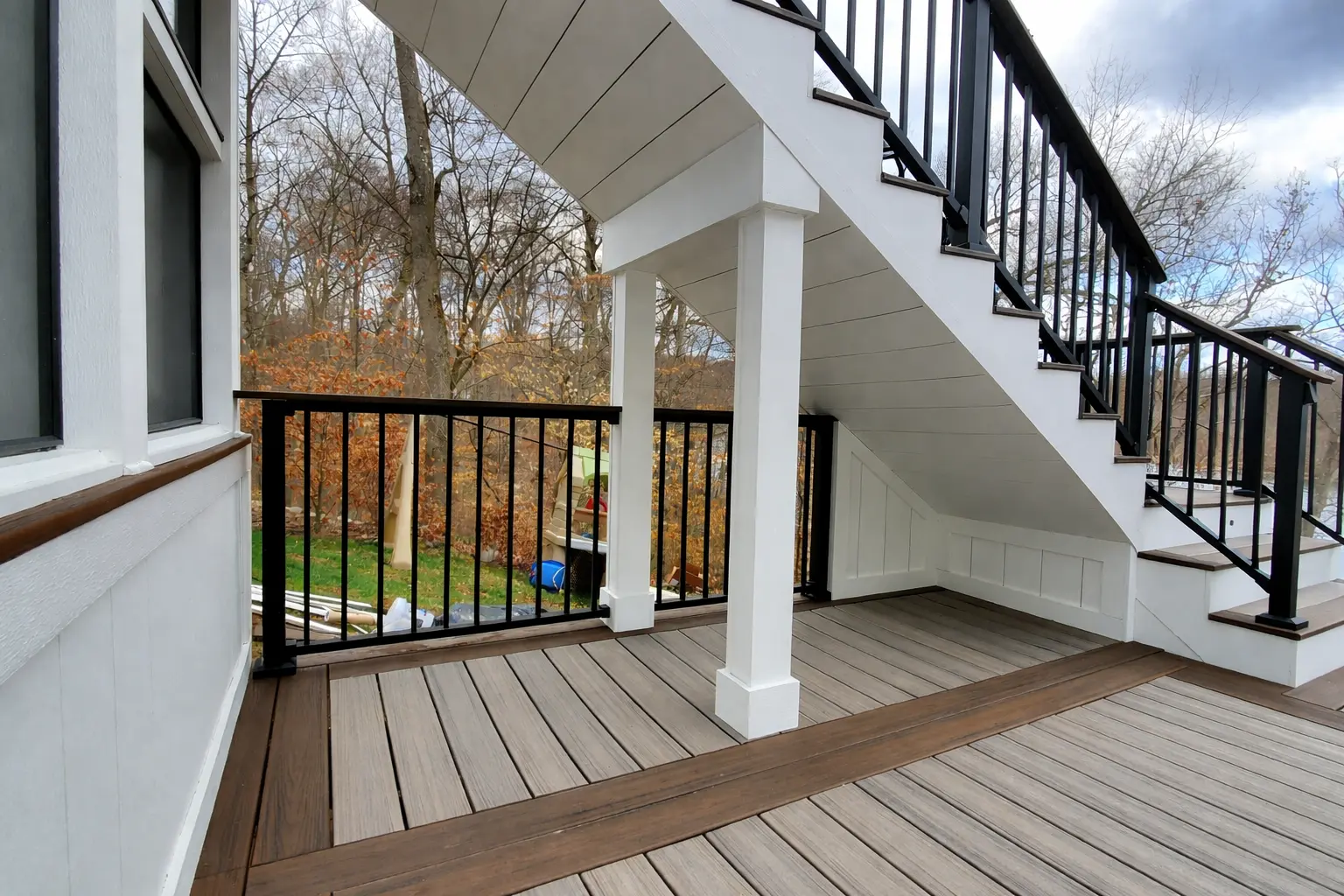
Ceilings that sag. Vinyl and plastic ceiling finishes are common in lower-cost covered outdoor spaces. They’re inexpensive to install and look acceptable initially. Over time, especially with Pittsburgh’s humidity and temperature swings, they begin to sag and warp. Premium products like Synergy ceiling systems are engineered for outdoor exposure and hold their shape and appearance long-term.
Trim that moves. Thin aluminum and vinyl trim is cheap to buy and easy to install. It’s also thin enough that within a season or two it starts showing signs of movement - gaps opening up, edges lifting, visible rippling along runs. PVC trim products like PlyGem behave differently. Thicker, more stable, designed for exterior exposure. It’s a more expensive line item in a proposal. It’s also one you won’t be thinking about five years from now.
Handrails that fail. Vinyl handrail systems are everywhere because they’re inexpensive. They’re also prone to showing scuff marks and dirt easily, and they become brittle in cold temperatures. A hard impact on a vinyl rail in January can crack it. Premium railing systems are built to handle that kind of stress.
Lighting that rusts. Low voltage landscape and deck lighting is one of the most value-engineered categories in outdoor construction. Inexpensive fixtures use hardware that corrodes quickly, especially in wet conditions. Premium outdoor lighting systems like TruScapes use materials that are built for long-term outdoor exposure. The difference is visible within a few seasons.
The Differences You Can’t See in a Proposal
Materials are the most visible driver of price differences, but they’re not the only one.
Professional outdoor living companies operate differently than general contractors who occasionally build decks. The infrastructure required to design, permit, build, and warrant a $100,000 outdoor living project correctly - experienced crews, proper insurance, detailed project management, quality control throughout construction - costs money. That cost is reflected in pricing.
Lower proposals sometimes come from contractors who are underpricing the work, cutting corners on labor, or simply don’t have the experience to know what a project like yours actually requires. The risk with those proposals isn’t always obvious upfront. It tends to show up during construction, or after it’s complete.
A Rule Worth Following When You’re Making Trade-Offs
If you’re working within a budget and need to make decisions about where to invest and where to pull back, there’s one principle that holds up consistently: prioritize material quality over square footage.
A well-built 400 square foot outdoor space with premium materials will outperform a 600 square foot space built with entry-level products every time - in durability, in appearance over time, and in the day-to-day experience of actually using it. Bigger isn’t better if the materials aren’t built to last.
Four More Questions to Ask Before You Sign Anything
1. What specific products are you specifying? Get the manufacturer and product line for decking, trim, railing, lighting, and ceiling materials. Not categories - actual product names.
2. What are the warranty terms on each major material? Premium products carry meaningful warranties. Entry-level products often don’t. That gap tells you something important about what the manufacturer believes about their own product.
3. Who is actually doing the work? Some contractors sub out every trade. Others have experienced crews who have built hundreds of projects. The answer affects quality control and accountability.
4. What does your post-construction support look like? If something goes wrong six months after the project is complete, what happens? A contractor who stands behind their work will have a clear answer to this question.
The Bottom Line
Stop collecting bids and start evaluating builders. The price on a proposal only makes sense once you understand what’s behind it - the materials, the process, the people, and the standards being applied to your project.
A significant price difference between proposals almost always means a significant difference in what’s actually being built. That doesn’t mean the most expensive proposal is automatically the right choice - but it does mean the cheapest one deserves serious scrutiny before you sign.
Read Also: The Benefits of Investing in a Custom Deck
Outdoor living projects are long-term investments. The deck you build this summer will be part of your home for the next 20 to 30 years. The decisions made during the proposal stage - about materials, craftsmanship, and who you trust to do the work - determine what that investment looks like a decade from now.
Find a builder you trust, ask the right questions, and build something worth building.
Different Process. Different Standards. Different Results.
Check Out Our Other Blogs
October 18, 2026
Why Fall Is the Best Time to Plan a Spring Deck in Pittsburgh

July 24, 2026
Fixed Price vs. Cost Plus: Understanding Your Deck Contract Before You Sign
June 24, 2026
Everything You Need to Know About Outdoor Living Permits
Ready to Create Your Dream Outdoor Space? Contact Us Today!