
From Concrete Slab to Outdoor Destination in Morgantown


Project Overview
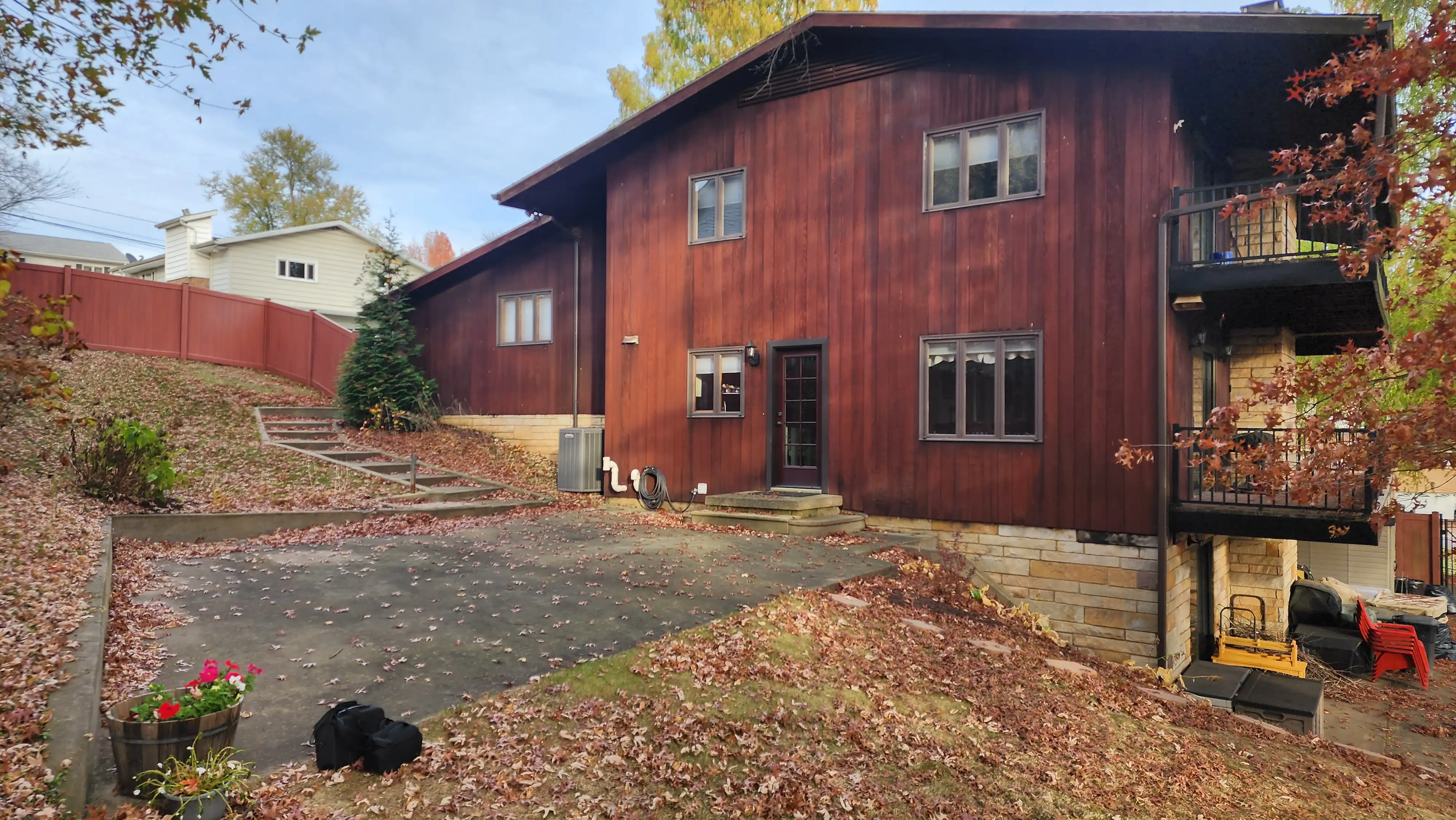
Some backyards have good bones. This one in Morgantown's Suncrest neighborhood had concrete - a lot of it. The existing slab was large, structurally sound, and completely without purpose. No zones. No shelter. No reason to be in one spot over another. Furniture sat on it, but nobody really used it. For a family that had been talking about transforming the space for years, the gap between what it was and what it could be finally got too wide to ignore.
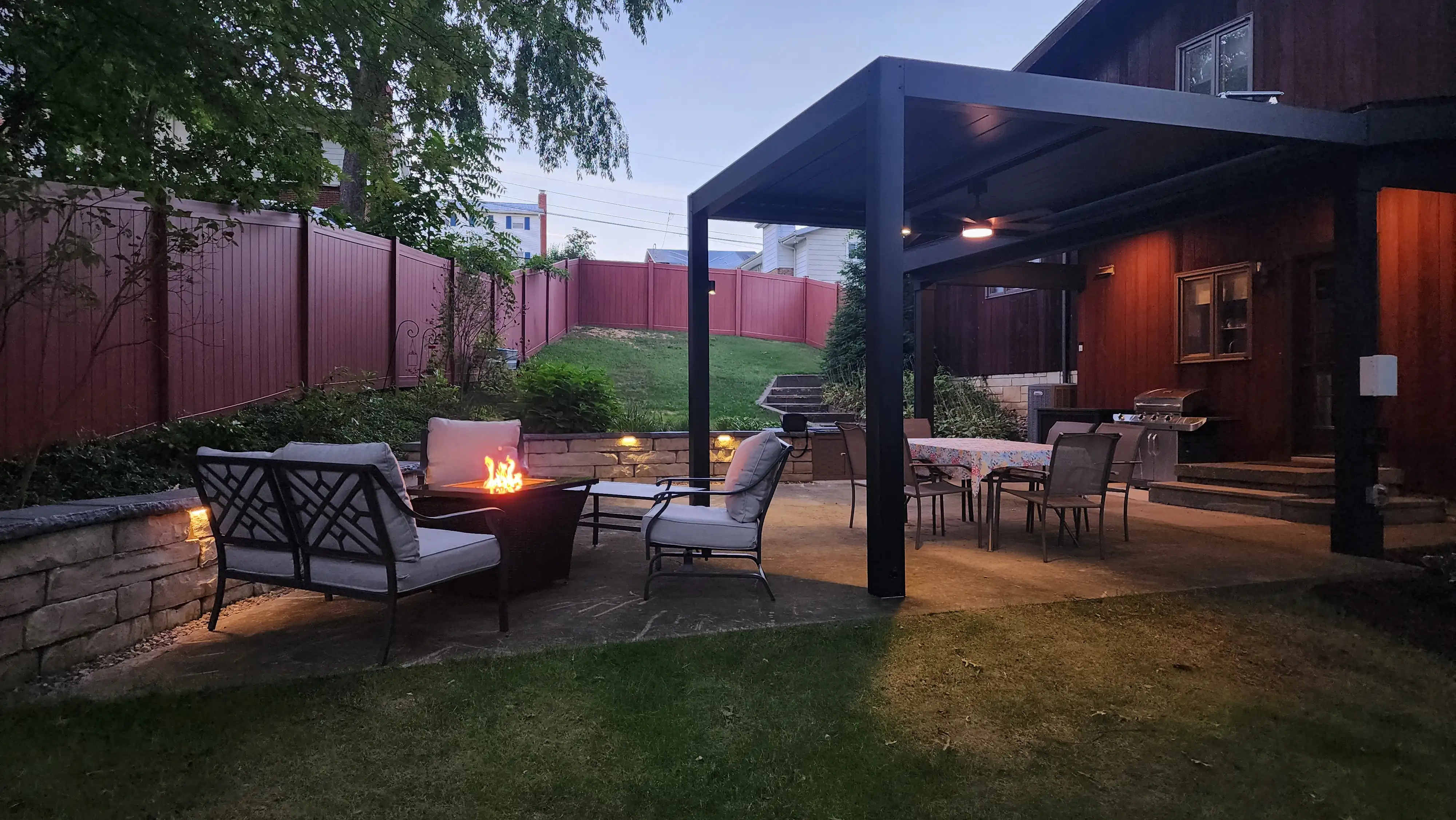
SelectDecks designed a solution built around the slab rather than against it. The result is a fully defined outdoor living space - covered, lit, and layered - that transforms a featureless pad into the place the whole family wants to be.

Vision
The ask was simple in concept and harder to execute: make the backyard worth using. For this family, that meant a space that could handle a crowd - somewhere people could spread out, find shade when they wanted it, gather around a fire, and move between zones without the space feeling like a parking lot with chairs.
Four things had to be on the list:
• A permanent covered area attached to the house - protection for the outdoor kitchen and a clean entry/exit from the back door
• A louvered pergola over the main patio with motorized louvers, open when they wanted sun, closed when they didn't, controlled by a wireless remote
• A new seating wall to replace the original, which was showing 20-plus years of wear and had all the signs of cracking, fading, and starting to fail
• Lighting that made the space usable after dark and worth looking at from inside the house
Challenges We Faced
The slab was staying. That was a budget decision, and it was the right one because the concrete itself was structurally fine. But keeping it meant every post, every foundation, every structural decision had to work around something that couldn't move. That kind of constraint either breaks a design or forces it to be smarter. Here it forced smarter.
1. Foundations Without Excavation
Supporting the shed roof required posts, and posts require foundations. Digging standard footings wasn't an option without tearing up the slab. The solution was helical piles which are steel shafts drilled into the ground through a small penetration in the concrete rather than excavated around it. We use them frequently for our decks, so it made sense in this application as well. Each pile was installed, capped with a structural bracket, and then wrapped inside an LP-trimmed post above. The structure is fully engineered and built to last. You'd never know the slab is still under there.
2. Keeping the Patio Clear
We attached the Sundance louvered pergola to the shed roof rather than running it as a fully independent free standing structure. Doing so let us reduce the post count and push the remaining posts to the perimeter of the patio where they don't interrupt the usable space. We also upsized the carrying beam so it could span the full width of the shed roof without a mid-span post landing in the middle of where people walk and sit. That decision is invisible when everythingis done, which is exactly the point.
3. Cutting the Seating Wall Free
The original seating wall wasn't a separate pour - it was poured monolithically with the patio slab. One continuous mass of concrete. Before we could build the new Rosetta Kodah wall in its place, we had to saw-cut the old wall free from the slab, remove it in sections, and prep the base without damaging the slab surface beneath. It added a step that most homeowners don't anticipate (nor did we), but skipping it would have meant building a new wall on a compromised base.
4. Making a Problem Disappear
Alongthe back wall of the house, a cluster of mechanical vents sat fully exposed and directly in the sightline of anyone sitting on the patio. Not something you want as the backdrop to an outdoor kitchen. We framed around them and built the kitchen structure to conceal them entirely - the vents still function, but they're invisible. What reads as a clean outdoor kitchen cabinet is alsosolving a problem that had no other good answer.
Design Features
Five different elements. Each one doing a specific job. All of them designed to read as one.
Shed Roof with Synergy Ceiling
The permanent covered structure attached to the house anchors the whole design. It protects the grill and outdoor kitchen from rain and provides a finished transition from the back door to the patio. The Synergy tongue-and-groove ceiling overhead brings the same warmth and finish quality you'd expect inside the house and it's the detail that makes this covered outdoor space feel intentional rather than functional. Recessed lighting on a dimmer keeps the cooking area fully usable after dark without washing light into the lounge zones.
LP Pre-Finished Black Trim
This project uses LP pre-finished black trim throughout the shed roof. It wraps every exposed beam, post, and structural member. LP trim is an engineered wood product treated to resist moisture, rot, and the kind of dimensional movement that causes standard wood trim to split and gap over time. The pre-finished black is factory applied, which means it holds its color and edge quality longer than field-painted alternatives.
The color choice was deliberate. The house exterior is deep red board and batten.White PVC trim - SelectDecks' standard - would have competed with it. Black recedes and frames. It makes the Synergy ceiling and the structure above read as a finished architectural element rather than an add-on. The same black carries into the Sundance pergola frame, which ties the two structures together visually even though they're technically separate systems.
Sundance Louvered Pergola
The louvered pergola covers the main gathering area - the zone where people sit. Louvers fully open, it reads as an open-air space with clean architectural framing overhead. Louvers closed, it provides weather protection without the permanence of a solid roof. The system is motorized - the family opens and closes the louvers with a wireless remote rather than manually adjusting anything. A ceiling fan integrated into the structure keeps air moving on warm evenings in Morgantown's humid summers. The dark aluminum frame matches the LP trim on the shed roof, which is what makes the two structures read as one connected system from across the yard.
Rosetta Kodah Seating Wall
The new seating wall does three things simultaneously:
1. Defines the edge of the patio
2. Provides informal seating for larger gatherings
3. Anchors the space visually at night
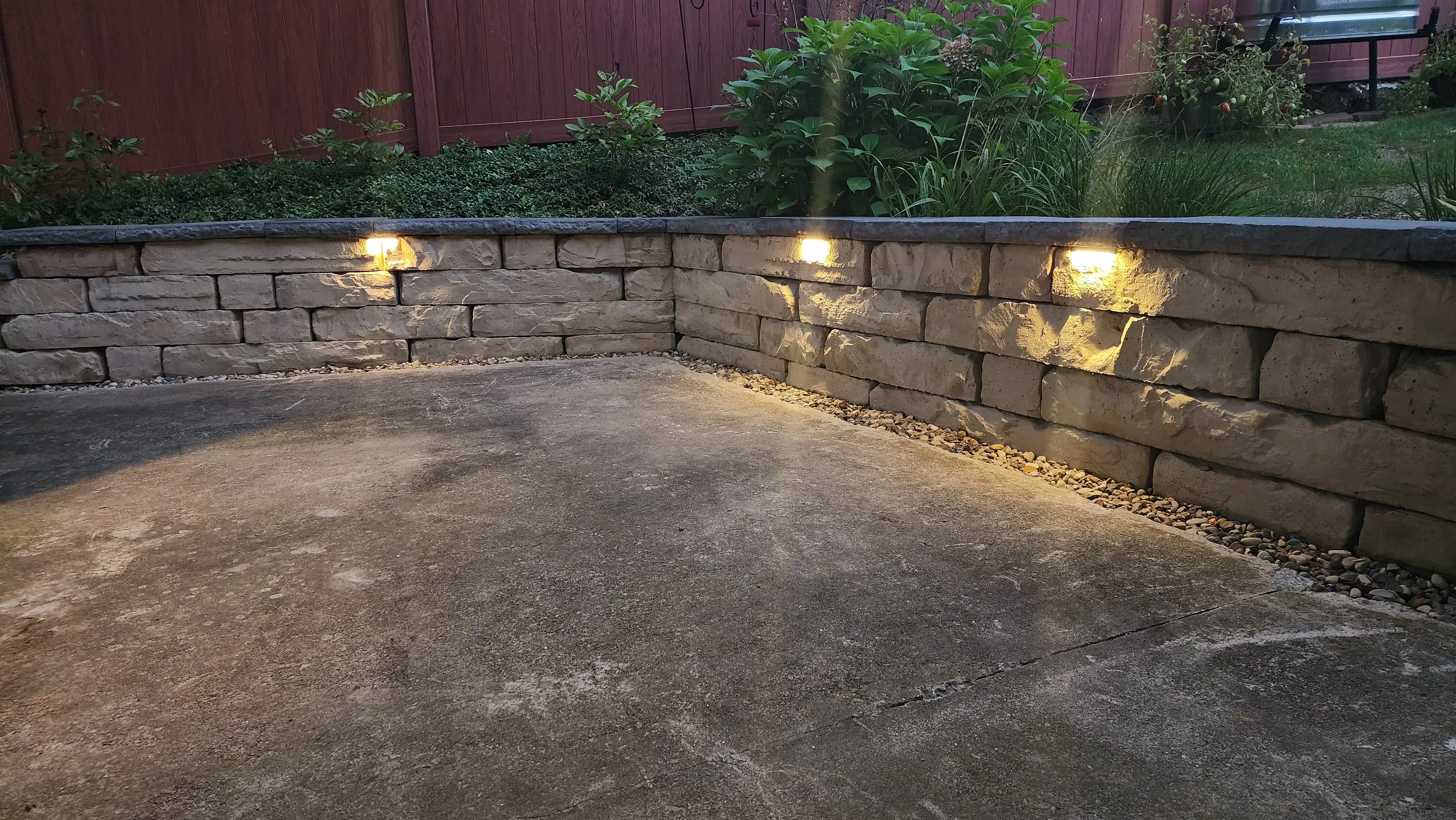
Rosetta Kodah is a wet-cast block manufactured by Lampus with a snapped limestone texture - it reads as natural stone without the cost and weight of cut stone, and its construction adhesive installation method creates a stable, tight wall that performs well through the region’s freeze-thaw cycles.
Charcoal caps give the top edge a clean, consistent line. TruScapes low-voltage fixtures mounted under the cap cast light downward across the face of the wall. The effect at night is a warm light washing down stone texture, river rock at the base is the kind of detail that makes a backyard feel finished rather than just built.
Outdoor Kitchen
Under the shed roof and positioned flush against the house wall, the outdoor kitchen keeps the grill and prep surface protected from rain while staying fully connected to the main patio. The leather finish granite countertop was a specific choice for outdoor conditions. The honed, textured surface of a leathered finish handles moisture and temperature cycling better than a polished granite surface, and it doesn't show every fingerprint and splash the way a high-gloss stone does. The structure conceals the mechanical vents. The countertop and cabinet face are what you see.
Materials & Brands
Morgantown gets the full seasonal range with the humid summers, hard winters, and the freeze-thaw cycling that separates materials that were engineered for it from materials that weren't. Every selection here was made with that in mind.
Synergy Tongue-and-Groove Ceiling
Synergy's exterior ceiling system holds its fit and finish through seasonal moisture changes that would split and gap untreated wood. It looks like real wood - warm, natural, finished - but it's engineered to stay that way in an outdoor application. For a covered space that will see Morgantown winters, that durability is the reason it's on this, and many other of our projects.
LP Pre-Finished Black Trim
LP's engineered wood trim is treated to resist moisture absorption and the dimensional movement that causes standard wood trim to fail at joints and edges over time. The factory pre-finish holds up better than field paint in outdoor conditions, particularly where UV and moisture cycles are most aggressive. On a project with this much exposed framing, using a trim product that won't need constant repainting matters.
Sundance Louvered Pergola
Sundance builds their louvered systems from extruded aluminum - no rot, no warping, no repainting. The louver mechanism is motorized and sealed for weather, operated by a wireless remote that works reliably in February the same as August. For a family that wants to push use into the shoulder seasons, that operational reliability isn't a nice-to-have.
Rosetta Kodah Block (Lampus)
Rosetta Kodah is a wet-cast, stone-textured block installed with construction adhesive between courses. That adhesive bond creates a stable wall while allowing minor flex through seasonal ground movement and also more forgiving than rigid mortar in climates where soil heave is a seasonal reality. Lampus manufactures out of Springdale, PA, and this product is commonly spec'd on projects throughout Western Pennsylvania and West Virginia specifically because of how it performs in this region's conditions.
TruScapes Low-Voltage Lighting
TruScapes fixtures are rated for exterior use year-round. Low-voltage systems eliminate the safety risk of house voltage lighting in wet and freezing conditions, and dimmer control lets the family dial the atmosphere - bright for hosting, low for a quiet evening by the fire. The warm color temperature of TruScapes fixtures was chosen specifically to complement the Kodah block and the Synergy ceiling rather than overpower them.

Results
The slab is still there. That was always the plan, and it's still the right call. But it's not what you see anymore. What you see is a backyard in Suncrest that has purpose - a covered zone for cooking, an adjustable zone for gathering, a lit perimeter that tells you exactly where the space begins and ends. The family has multiple ways to use the patio at once, and the structure overhead means weather isn't the deciding factor for whether anyone goes outside. For a project built around a constraint most contractors would have used as a reason to demo and start over, it doesn't look like a workaround. It looks like it was designed exactly this way from the beginning. That's the goal on every job. This one hit it.
Inspired by This Project?
If you have an underutilized outdoor space in Suncrest, Cheat Lake, or the greater Morgantown Area, SelectDecks can help you design a solution around what you have - and built to last. Contact SelectDecks today to schedule your consultation and see what's possible.

Download our free Pricing Guide
Fill out your information below and get immediate access to valuable insights to help guide you on your next project!
Explore Our Other Projects
August 16, 2026
A Covered Deck Replacement Built for a Growing Family in Upper St. Clair, PA
July 10, 2026
From Failing Wood Deck to Covered Outdoor Living in Upper St. Clair, PA
.webp)
December 18, 2025
A Pittsburgh One of a Kind Covered Deck with Curved Bar
Ready to Create Your Dream Outdoor Space? Contact Us Today!