
November 26, 2025
Still Deciding on a Patio Style? 9 Patio Ideas Pittsburgh & Morgantown Homeowners Love
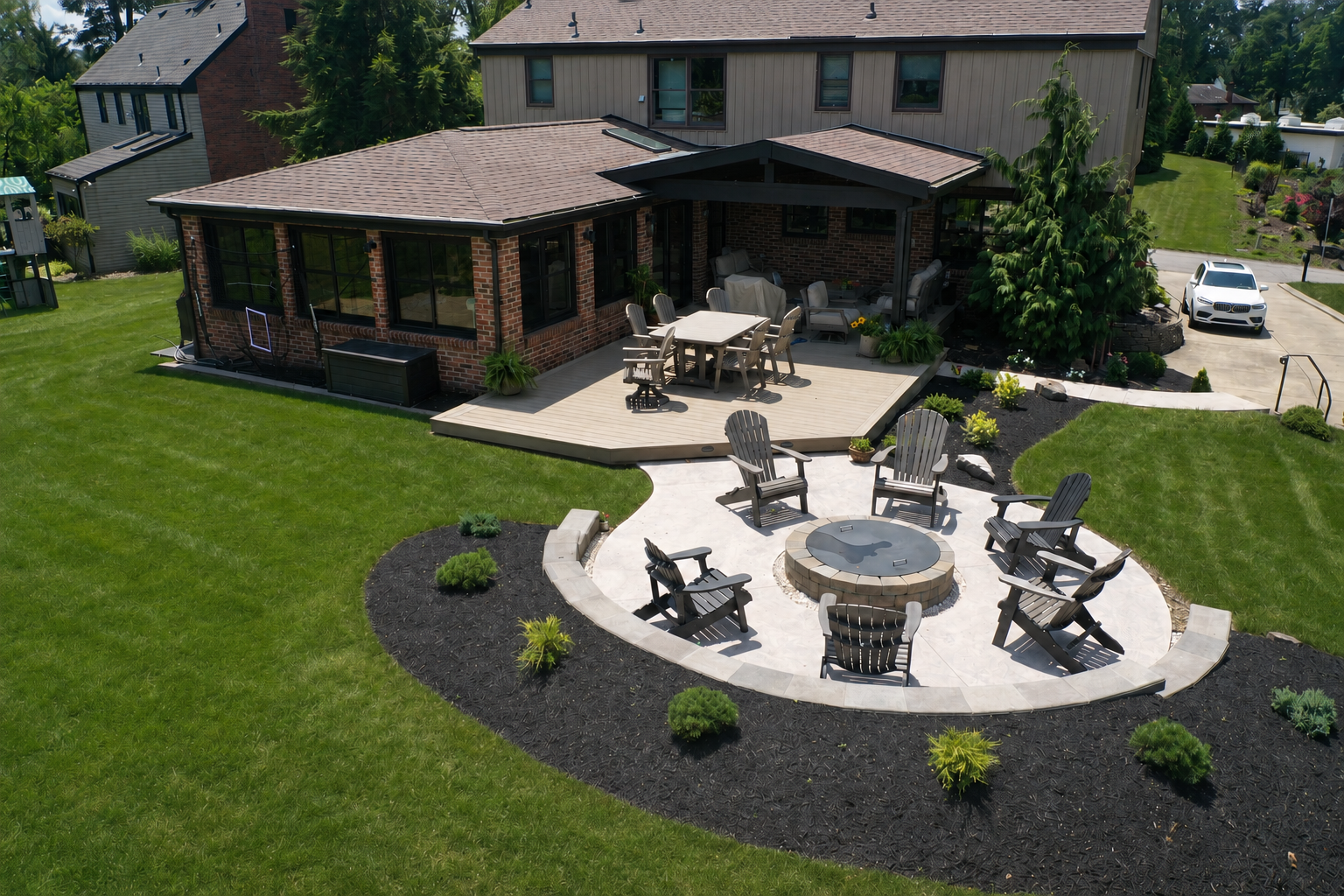
If you’re thinking about upgrading your backyard in Pittsburgh, Morgantown, or Northern Virginia, choosing the right patio idea and style is one of the biggest decisions you’ll make.
Your patio isn’t just a slab of concrete. It’s:
- Where summer cookouts actually happen
- Where you drink coffee before the day starts
- Where the kids (or grandkids) play while you relax
- One of the first things buyers notice when you sell your home
So instead of scrolling through endless Pinterest boards, let’s walk through real-world patio design ideas, where they work best, and how to match them to your home and lifestyle; with tips straight from the perspective of a professional patio builder in Pittsburgh with over 20 years of experience.
Before You Pick a Patio Idea: 4 Questions to Ask Yourself
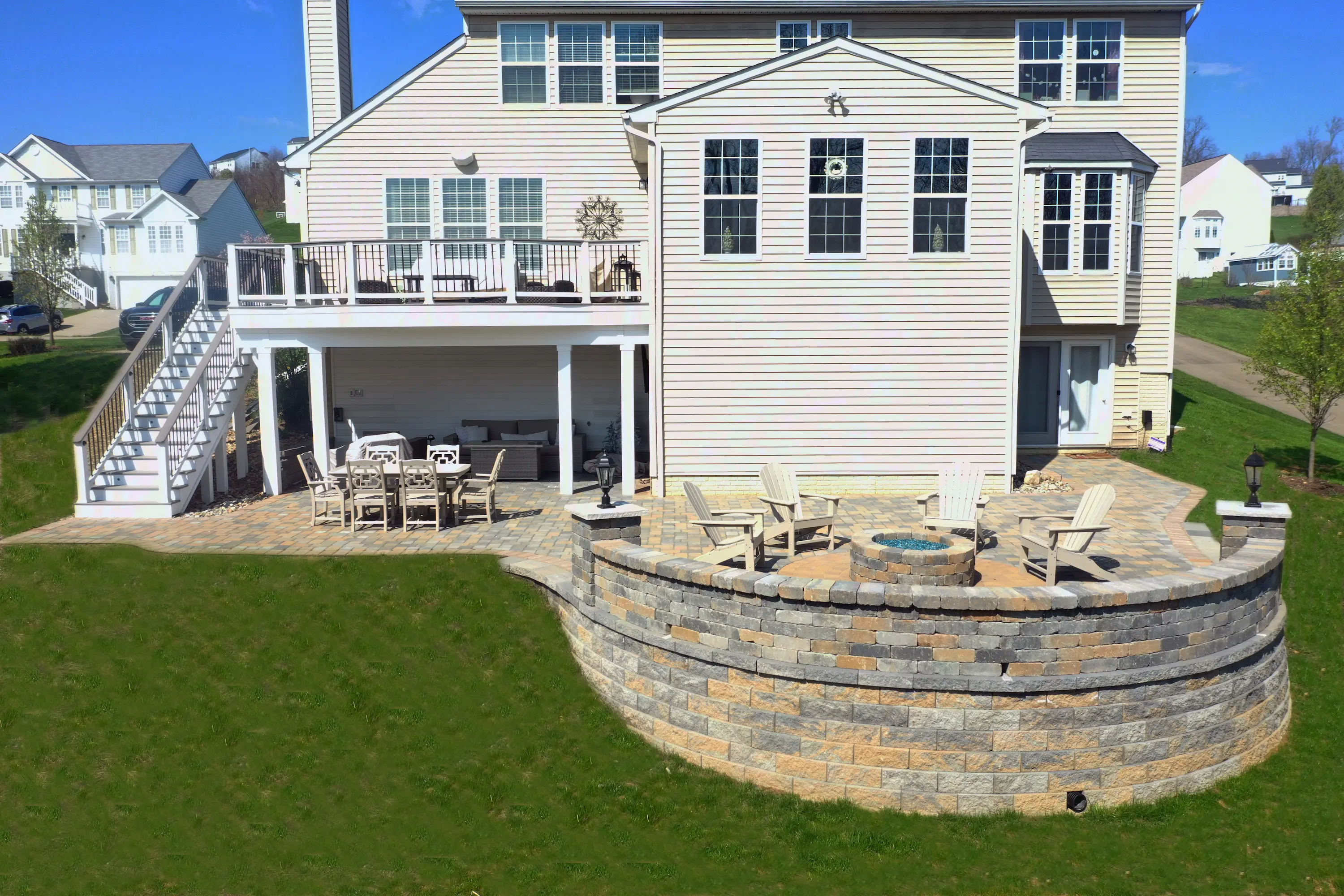
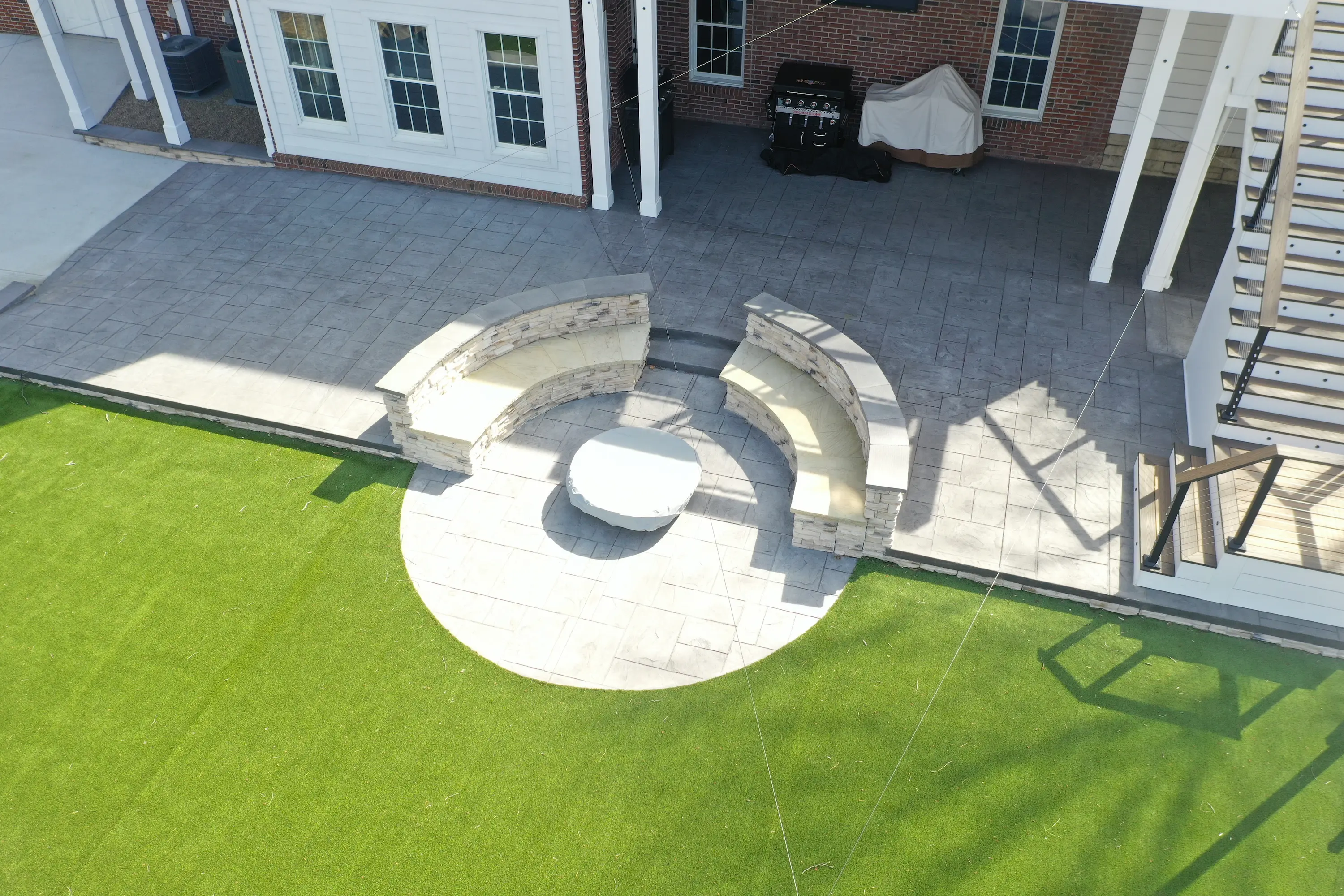
Before we dive into styles, get clear on a few basics. This will save you money and help your patio contractor design something that actually fits your life:
1. How will you use the space?
- Quiet reading nook?
- Big family gatherings?
- Hot tub? Fire pit? Outdoor kitchen
2. How much sun and shade do you get?
Patios in full sun might need pergolas or covered structures, while shaded yards may need materials that handle moisture and moss better.
3. What’s your maintenance tolerance?
- Love tinkering and staining? You can consider natural wood accents.
- Want low-maintenance? Think pavers, stamped concrete, or composite details.
4. Is your yard flat, sloped, or tricky?
In hilly areas like parts of Pittsburgh, you may need multi-level patios, retaining walls, or integrated steps.
Read Also: Understand the average Lifespan of your Patios
Top Patio Design Ideas in 2026 to Transform your Outdoor Space
1. Contemporary Patio: Clean Lines & Low Maintenance
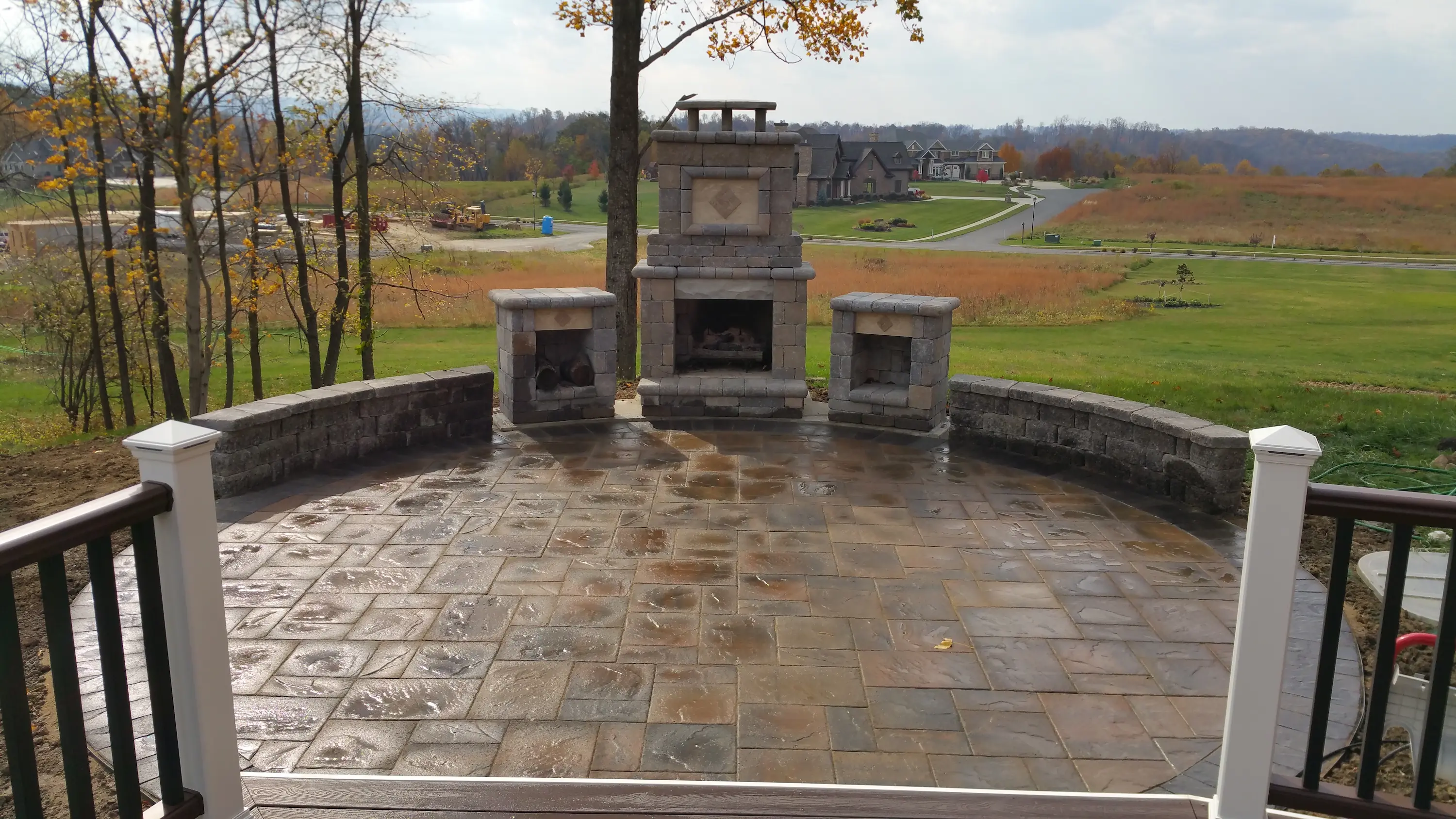
If you like modern homes, simple lines, and “less but better,” a contemporary patio might be perfect.
What it looks like:
- Large-format pavers or smooth concrete
- Neutral tones (gray, charcoal, warm beige)
- Sleek outdoor furniture with minimal ornamentation
- Simple planters and low-profile lighting
Best for:
- Newer homes and townhomes
- Homeowners who want easy cleaning and a modern look
- Smaller yards where clean lines make the space feel bigger
Pro tip: Ask your patio contractor about integrating LED step lights, linear fire features, or built-in benches to keep the design clean but functional.
2. Mediterranean Patio: Warm, Relaxed & Great for Entertaining
Want your backyard to feel like vacation? A Mediterranean-inspired patio can bring that relaxed coastal energy home.
What it looks like:
- Warm earthy tones (terracotta, sand, cream)
- Patterned tile accents or stamped concrete with texture
- Wrought iron or wood furniture
- Potted herbs, olive-style trees, and climbing vines
Best for:
- Homeowners who love to host long dinners outside
- South-facing patios that get plenty of light
- Older homes with character that can handle a bit of charm and detail
Pro tip: In climates like Pittsburgh and North Central West Virginia, talk to your patio builder about frost-resistant materials so decorative tile or stamped concrete holds up through freeze–thaw cycles.
3. Cottage-Style Patio: Cozy, Charming & Perfect for Smaller Spaces
If your ideal afternoon involves a book, a blanket, and flowers everywhere, a cottage-style patio fits perfectly.
What it looks like:
- Smaller, intimate seating areas
- Brick or stone pavers with soft, organic edges
- Vintage or bistro-style furniture
- Flower beds, climbing roses, and container gardens
Best for:
- Smaller yards where you want charm over “grand design”
- Older homes or traditional neighborhoods
- People who enjoy gardening and seasonal color
Pro tip: Ask your patio contractor about integrating planting beds or built-in planters around the patio so the hardscape and landscape feel like one design.
4. Tropical-Inspired Patio: Vacation Vibes at Home
You don’t need a plane ticket to feel like you’re on vacation. A tropical-inspired patio brings that resort feel into your backyard.
What it looks like:
- Bold cushions and outdoor rugs in bright or deep colors
- Layered lighting: string lights, lanterns, and spotlights on plants
- Textured materials like wood accents and woven furniture
- Lush greenery: big-leaf plants, ornamental grasses, and potted palms (cold-hardy or container-based in this climate)
Best for:
- Backyards where you want a “destination” space
- Families who love to host parties and barbecues
Pro tip: Because winters in Pittsburgh and Morgantown are real, plan your tropical look with pots and movable plants that can be brought inside or replaced seasonally. Your patio builder can help you design where those containers and features live so the space still looks good in the off-season.
5. Rustic Farmhouse Patio: Relaxed, Warm & Family-Friendly
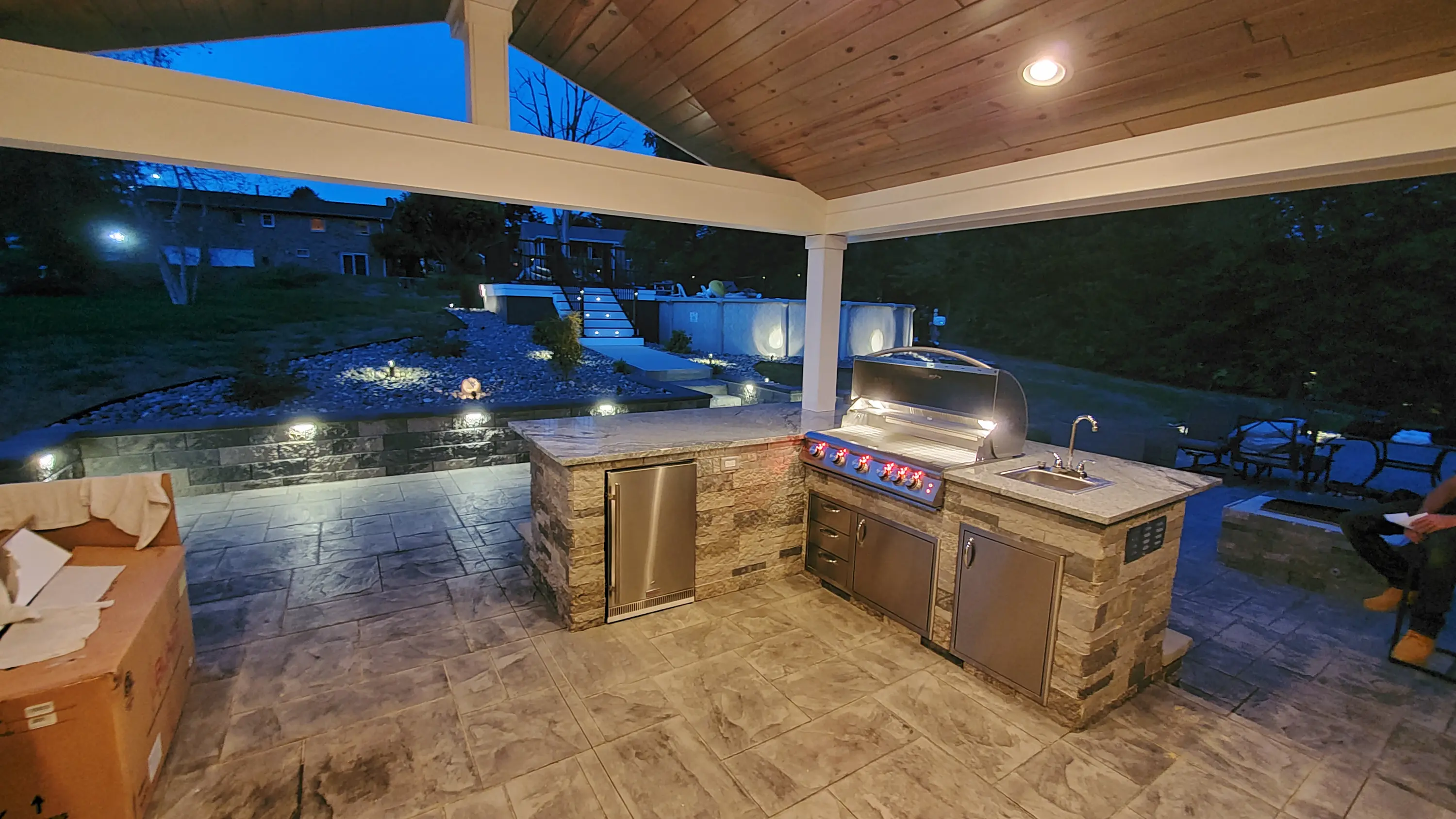
If you love the look of reclaimed wood, cozy textiles, and a big table for everyone, a rustic farmhouse patio is a great fit.
What it looks like:
- Natural stone or textured pavers
- Wood pergolas or exposed beams
- Lantern lighting and warm-toned fixtures
- Large tables and comfortable seating
Best for:
- Families who use their outdoor space daily
- Homes with a more traditional or farmhouse look
- Properties that blend with trees and natural surroundings
Pro tip: Ask your patio builder about integrating a fire pit or outdoor fireplace; it pairs perfectly with farmhouse style and stretches your outdoor season well into fall in West Virginia and Western PA.
6. Desert-Inspired Patio: Minimal, Calm & Easy to Maintain
If you want a calm outdoor space without lots of upkeep, a desert-inspired patio can be adapted beautifully—even in a non-desert climate.
What it looks like:
- Neutral, sandy tones with touches of rust or terracotta
- Gravel or stone accents around the main patio
- Cacti and succulents mixed with hardy, drought-tolerant plants
- Clean-lined furniture and simple decor
Best for:
- Homeowners who prefer low-maintenance landscaping
- Busy professionals who want a peaceful space without major upkeep
Pro tip: In our climate, your patio contractor can help you choose cold-hardy plants and smart drainage, so the look stays clean and intentional year-round.
7. Zen Patio: Simple, Peaceful & Perfect for Recharging
If your patio is your place to reset, a Zen-inspired design might be exactly what you need.
What it looks like:
- Clean lines and open space (no clutter)
- Natural materials like stone, wood, and bamboo
- A small water feature or fountain for sound
- Simple, carefully chosen plants
Best for:
- Homeowners who want a calm retreat
- Smaller spaces where simplicity feels more spacious
- People who prefer quiet morning coffee or meditation outside
Pro tip: Talk to your patio builder about integrating screening, privacy walls, or landscaping that shields you from neighboring views so the space truly feels like a retreat.
8. Bohemian Patio: Colorful, Layered & Perfect for Lounging
If your style is more creative and relaxed, a bohemian patio gives you freedom to mix and match.
What it looks like:
- Cushions, poufs, hammocks, and layered textiles
- Mixed materials: wood, rattan, metal, and textiles
- String lights, lanterns, and candles for evening ambiance
- Potted plants in all shapes and sizes
Best for:
- Informal hangouts, movie nights, and casual gatherings
- Homeowners who like to refresh decor seasonally
Pro tip: Work with your patio contractor to design a simple hardscape foundation (like pavers or concrete) that lets you update decor as your style evolves without needing to rebuild the structure.
9. Urban / Industrial Chic Patio: Bold, Modern & Great for Smaller Backyards
If you like loft-style interiors or city vibes, an urban industrial patio brings that energy outside.
What it looks like:
- Concrete, steel, and dark metal elements
- Exposed brick (or brick-look walls) when possible
- Simple, angular furniture
- Statement lighting or a modern fire feature
Best for:
- Townhomes or city lots in and around Pittsburgh
- Smaller backyards where a strong design makes a big impact
Pro tip: Ask your patio builder about privacy screens, vertical planters, or built-in seating—these are big wins in tight spaces where you want comfort without clutter.
Which Patio Style Is Right for You?
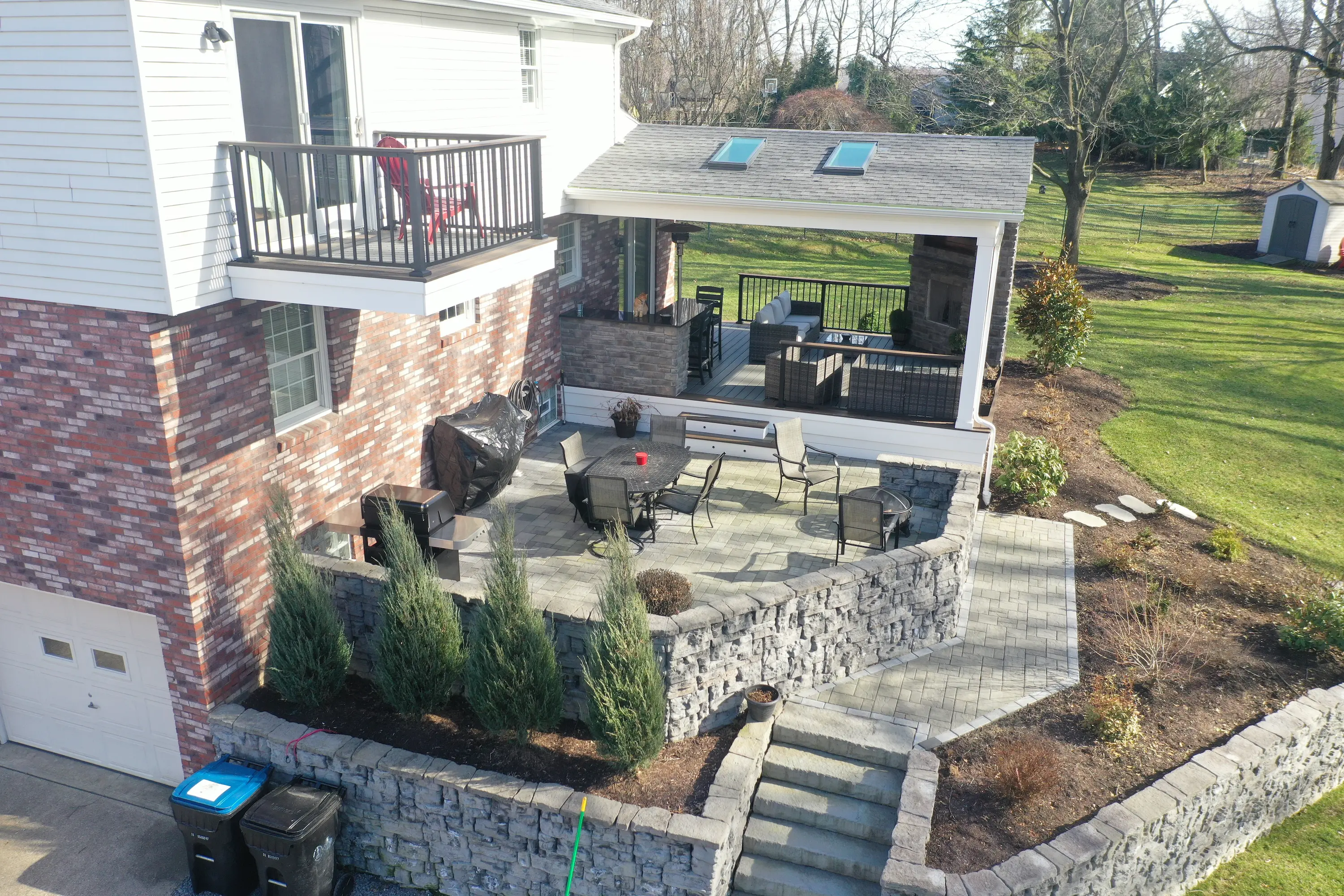
The “right” style isn’t what’s trending on Instagram. It’s the patio that:
- Fits your home’s architecture
- Supports how you actually live outside
- Works with your yard, slope, and sun exposure
- Matches the maintenance level you’re realistically okay with
This is exactly where a professional patio builder in Pittsburgh, Morgantown, or Northern Virginia earns their keep: turning ideas into a design that looks great and works in real life.
Read Also: The Ultimate Guide for Choosing the Best Patio Finish
Ready to Design Your Patio With a Local Expert Patio Contractor?
If you’re still scrolling patio design ideas for your backyard and feeling a bit stuck, that’s completely normal. There are a lot of options, and you only want to build this once.
Talk to SelectDecks; a team of Expert Patio Builders who know Pittsburgh, Morgantown & Northern Virginia
When you book a consultation, you’ll:
- Walk through how you want to use your outdoor space
- Get recommendations on patio styles, materials, and layouts that fit your home
- See what works best for your yard, your budget, and our local climate
- Leave with a clear plan and next steps; not more confusion
Ready to stop guessing and start designing?
Reach out today to schedule your patio design consultation and start building an outdoor living space you’ll actually use—and love—for years.
Check Out Our Other Blogs

July 24, 2026
Fixed Price vs. Cost Plus: Understanding Your Deck Contract Before You Sign
Two contractors can hand you proposals for the same outdoor living project, and the numbers on the last page can be the least important difference between them. What matters more is the contract structure underneath: whether you are signing a fixed price contract or a cost plus agreement. That single decision determines who absorbs the cost when something on your project does not go according to plan. And on a construction project, something always does not go according to plan.
Most homeowners never ask which one they are signing. They compare bottom-line numbers, pick the one that feels reasonable, and find out how the contract actually works six weeks into construction when an invoice arrives that they were not expecting.
Here is how the two structures work, what each one means for your risk, and what has to be true about a builder before a fixed price is even possible.
Fixed Price vs. Cost Plus: The Two Ways Contractors Price Work
Cost plus means you pay the actual cost of the project plus an agreed percentage on top. Materials, labor, subcontractors, and equipment get billed as they are incurred, and the builder adds their margin to that total. It is sometimes structured with a not-to-exceed ceiling, and it is closely related to time and materials pricing, which bills labor hours and material costs the same way. The number you see at the proposal stage is a projection, not a commitment.
Fixed price means the number in the proposal is the price of the project. If material costs climb, if the crew takes longer than planned, if the builder miscalculated something during planning, the price does not change. The only thing that moves the number is a change you request.
The distinction sounds academic until you follow it through to a real situation. Under cost plus, if a crew takes three extra days to frame a deck, those three days get billed to you. Under a fixed price, those three days come out of the builder's margin.
That is the entire difference, and it is worth sitting with: the contract structure decides who carries the risk of the unknown. It is also one of the reasons two proposals for the same project can land tens of thousands of dollars apart, which we covered in more depth in Why Deck Prices Vary So Much and Getting 3 Estimates is a Bad Idea.
Why We Do Not Write Cost Plus Contracts
Every SelectDecks project is fixed price. We give the homeowner a price, and that is the price unless they change something.
Our position on cost plus is straightforward. It removes the builder's incentive to control costs. A builder billing cost plus can order more material than the job needs, run more labor hours than the job requires, and every one of those decisions increases what they get paid. The structure rewards inefficiency.
The second problem is comprehension. Almost no homeowner has a working understanding of construction markup, margin, burden rates, or how overhead gets allocated to a job. A cost plus contract asks them to audit numbers they have no framework for evaluating. What you get is a homeowner who is confused, and a confused homeowner starts losing trust in the person handing them invoices. That is a bad way to spend four months together.
The Honest Trade-Off
A fixed price will often look higher on paper than a cost plus proposal for the same project, and there is a legitimate reason for it. When a builder absorbs the risk of overruns, that risk gets priced into the number. You are paying for certainty, and certainty is not free.
You also give up some visibility. A fixed price proposal does not show you what the framing cost or what the demo cost. If line-item transparency matters more to you than price certainty, cost plus gives you that, and you should go in knowing you are trading one for the other.
We think price certainty is the better trade for a homeowner. But it is a trade, and anyone who tells you a fixed price has no downside is selling you something.
What a Fixed Price Actually Requires From the Builder
A fixed price is only as good as the work that happens before it gets written. Any contractor can put one number on a page. The question is whether that number is built on anything.
Ours comes from unit costs. Square footage, linear footage, and per-unit pricing for the components of a project, all of it built from cost data we have tracked across hundreds of completed projects. Custom elements like outdoor kitchens and outdoor fireplaces get priced individually, because what a homeowner selects for a countertop or a finish materially changes the cost. Appliances are priced by the appliance. Overhead and profit are built into the unit price rather than tacked on at the end.
That data is the reason we are comfortable committing to a number. We know what a covered deck costs us to build in Pittsburgh because we have built them, tracked the actual costs afterward, and corrected the pricing when we were wrong.
This is where most of the industry falls down. A large share of contractors price off rules of thumb inherited from someone else: double the material, triple the labor, whatever the local version of that is. They do not track job costs against the estimate afterward, which means they never find out whether they made money on a project or lost it. A fixed price from a builder who does not know their own costs is not a commitment. It is a guess with confident punctuation, and it will turn into change orders once the job is underway.
Proposal, Not Estimate
We do not issue estimates or quotes. We issue proposals.
The difference is not semantics. An estimate is an informed guess based on a walk-through and a conversation. A proposal is a professionally drafted scope of work that lists each item and service being performed, along with design work, engineering where the project requires it, layouts, and renderings. Every homeowner gets a complete proposal within seven to ten business days of the site visit.
If a builder hands you a number on a business card at the end of a twenty minute visit, you have an estimate, whatever they call it. Ask what happens to that number when they get into the details. It is one of several questions worth asking before you hire anyone, and we put together a fuller list in 10 Questions You Should Be Asking Your Pittsburgh Deck Builder.
Contingency, Disclosed Upfront
Every budget we prepare includes a contingency fund. It exists for the discoveries that construction produces: a ledger board rotted into the rim joist that nobody could see until demolition, ground hard enough to require a jackhammer, the conditions you cannot verify from the surface.
Homeowners know the contingency exists before they sign, because we explain it during preconstruction. When we draw from it, we tell them and we document it. What does not happen is a phone call asking for more money or a schedule extension because the site surprised us.
Change Orders: What They Are and Why Ours Are Rare
A change order is a written modification to the original scope of work, with a price attached, signed by both parties before the work happens. That is the whole concept. The reason change orders have a bad reputation is not the mechanism. It is how often they get used to correct a bid that was written light on purpose.
Here is the rule that follows directly from a fixed price contract: if the price is fixed, the only legitimate change order is one the homeowner initiates.
We have never issued a change order to a homeowner for something we got wrong. Not once. If our budget was short, if our crew ran long, if we missed something during planning, that cost is ours.
Two Projects Where That Cost Us Real Money
Our system had five eighths inch PVC trim budgeted across several recent projects. Every supplier we work with was out of it, and we could not source it anywhere. The only alternative was three quarter inch PlyGem trim, which runs twenty to thirty percent more. We bought the three quarter inch, absorbed the difference, and the homeowners paid what their proposals said they would pay.
Decking, railing, trim, and ceiling material are normally the most stable pricing on a project, because we buy them from the same suppliers on every job at pricing we have established over years. The exception is exactly what happened above. When a supplier runs out and we have to source from someone we do not typically work with, we are bound to their pricing instead of ours, and on premium materials like decking that difference can run into thousands of dollars on a single project. That gap is ours to absorb.
The second one is worse, because the mistake was ours at the top. On a recent project that included an outdoor kitchen, we told the homeowner appliances were included in the budget. Then the appliances never made it into the budget before the proposal went out. We bought them anyway. It was a few thousand dollars, and the homeowner never heard about it.
That is not generosity. We told them a price that included appliances, they accepted a proposal on that basis, and standing behind your word is the minimum standard for calling yourself a professional. We now run every budget through a second reviewer specifically so that mistake does not repeat.
Labor overruns work the same way. Over the years we have absorbed a substantial amount of money in labor that ran past what we budgeted. It is a real cost of operating this way, and it is not the homeowner's problem.
What Happens When the Homeowner Does Want a Change
Homeowner-initiated change orders are rare on our projects, because preconstruction is thorough enough that most decisions are already made before anyone breaks ground. They are rare enough that when one comes through, we have to slow down and make sure we are recording it correctly.
When one does happen, the process is simple. The homeowner requests the change. We write it up in our project management system with the specific scope, we price it, and it goes to them for review. They approve and sign inside the system, and both sides keep permanent access to the record. Nothing gets built off a verbal agreement or a text message.
We require one hundred percent payment on change orders at the time of approval. Two reasons. We have been burned before by reaching the end of a job with a stack of change orders and a dispute about what was authorized. And paying it in full keeps the original payment schedule intact rather than forcing a recalculation of percentages against a moving contract total. It is cleaner for us and cleaner for the homeowner.
Occasionally a homeowner asks for something mid-project that is custom enough that we cannot price it precisely on the spot. In that case we give them a range and let them decide whether they are comfortable with it. If we say three to five thousand and it comes in at eight, the overage is ours. Even a range is a commitment.
One Price, One Number: How We Handle Transparency
Here is where we differ from most of the market, and it surprises people: we do not provide line-item pricing.
Homeowners receive one price for the project. Not a cost for demo, a cost for framing, a cost for trim work, and a cost for railing. One number for the scope described in the proposal. If a project has genuinely separate phases, a deck and a patio, we will price those separately so a homeowner can decide what to build and when. Within a phase, we do not break it apart.
Two reasons.
The first is that a line-item list is not actually informative. Construction pricing is interdependent. Pull one item out and the numbers around it change, sometimes significantly, because crew mobilization, sequencing, and material orders were built around the whole. A homeowner reading a line item as a standalone price is reading something that is not true.
The second is that an itemized list turns a proposal into a shopping list. It invites the conversation where a family member is going to handle the demo, or a friend can do the concrete. We are accountable for the entire project, including the parts underneath the finished surface, and we cannot warrant work we did not perform or supervise.
Transparency is About Access, Not Itemization
What we do give homeowners is complete access. Every project runs through a client dashboard, and the homeowner sees essentially everything we see: the proposal, the schedule, permit documentation, our licenses and insurance certificates, invoices, change orders, progress photos, renderings, layouts, surveys, and every document produced during preconstruction. The only thing they do not see is our internal team communication.
All project communication runs through that one channel. We tell homeowners directly not to text us and not to email us, because messages in those channels get buried and lost. Inside the system, a message is visible to multiple people on our team at once, so a request does not depend on one person remembering it. When a homeowner mentions they are thinking about changing something, more than one set of eyes sees it, and someone makes sure it gets addressed properly.
That is what transparency actually means on a construction project. Not a spreadsheet of trade costs, but a permanent, timestamped record that both parties can see, where nothing important lives in someone's memory or a text thread.

Questions to Ask Before You Sign Anything
Whatever builder you choose, these four questions will tell you what kind of contract you are signing.
1. Is this a fixed price or an estimate? Ask directly, and ask what the document is called in the contract. The answer determines everything else.
2. What specifically triggers a change order? If the answer includes anything about the builder's own errors, cost increases, or labor overruns, you do not have a fixed price, regardless of what the proposal looks like.
3. What is excluded from this scope? Exclusions are where a low proposal hides. Get them in writing.
4. How do you handle unforeseen site conditions and weather delays? Both are real in Western Pennsylvania, where freeze-thaw cycles, wet springs, and frozen ground are ordinary parts of a construction calendar. A builder who has thought about it will have a specific answer involving contingency and schedule. A builder who has not will tell you it usually is not a problem.
The Bottom Line
A contract's structure is a statement about who the builder thinks should carry risk. Cost plus places it on the homeowner. Fixed price places it on the builder, and it only works if the builder knows their costs well enough to survive being wrong occasionally.
Ask which one you are signing before you sign it. Ask what triggers a change order. And be skeptical of a fixed price from a contractor who cannot explain how they arrived at the number, because a price that is not built on tracked cost data will not hold once construction starts.
If you are planning an outdoor living project in the Pittsburgh area and you want a fixed price built on real numbers, schedule a site visit with SelectDecks. We will spend one to two hours on your property, walk through every option with you, and deliver a complete proposal with layouts and renderings within seven to ten business days. See our custom deck building work in Pittsburgh or contact us to get on the schedule.
Different Process. Different Standards. Different Results.
June 24, 2026
Everything You Need to Know About Outdoor Living Permits
Most Pittsburgh homeowners who call us about a deck project ask about cost, materials, and timeline. Permits come up eventually, usually when we bring them up. The typical assumption is vague: they probably need one, it probably takes a while, and it's probably a headache. They're right on all three counts. At SelectDecks, we handle the entire permit process ourselves so homeowners don't have to think about any of it, but understanding what that process involves helps you ask better questions and choose the right contractor in the first place.
Deck permits in the Pittsburgh metro area vary township to township, can depend on what you're building and where on your property it goes, and can either run smoothly or completely derail a project depending on how they're handled. We've seen both. This post covers what the permit process actually involves, what homeowners most commonly get wrong, and why the way your contractor handles permitting is one of the most revealing things about how they run their business.
If you're still figuring out how permitting fits into the broader project timeline, our post on how long it takes to build a deck in Pittsburgh covers the full picture from approved proposal to final inspection.
We Handle the Permit. Here’s Why That Matters.
Contractors handle permitting in three different ways, and the approach they take tells you a lot about how they operate.
Some contractors pull and manage the permit entirely: drawings, application, fees, inspections, everything. The homeowner supplies their property survey and otherwise stays out of it. That's how we handle it at SelectDecks. Permitting is included in the scope of the project, and the homeowner doesn't have to show up for inspections, manage paperwork, or pay a separate fee. The only thing we ask for is their property survey, which we need to prepare the site plan showing where the structure is going to sit on the lot.
Other contractors will do the permitting work but charge a separate line item for it, anywhere from a few hundred to a couple thousand dollars depending on the company and the project scope. That's not unreasonable, but it's a cost worth clarifying before you sign a contract.
And some contractors tell the homeowner to handle permitting themselves: get the permit, schedule and be present for inspections, coordinate with the municipality, and sign off on everything. If you've never been through that process, it's more involved than it sounds, and the risk of something going wrong lands squarely on you, not the contractor.
When you're evaluating companies, ask directly: who handles permitting, what's included, and what does the homeowner need to do? The answer should be clear and specific. Vague answers here usually mean the process is vague too.
What Goes Into a Pittsburgh Deck Permit Package
A complete permit submission in the Pittsburgh area includes several components. The municipality needs to know what's being built, where it's going, and that it meets structural and zoning requirements. In practice, that means:
• Permit drawings (construction drawings). These are detailed blueprints showing what's being built: dimensions, materials, structural connections, footing specifications. We produce these in-house as part of our pre-construction process.
• Site plan. This is typically the homeowner's property survey, marked up to show where the new structure will be located on the lot. The township uses this to verify setback compliance, which is covered in the next section.
• Completed application. Standard information: project description, estimated cost, contractor license number, homeowner information, and the scope of work.
• Renderings. We include 3D renderings in our permit packages to give the reviewer a clear visual of what the finished project looks like. No municipality requires them, but reviewers tend to appreciate them and they can help move the process along.
Once all of that is assembled and submitted, the municipality reviews it against their local building code and zoning ordinances. If everything is in order, you get an approved permit. If something is missing or unclear, the application comes back. Depending on your relationship with the township, that can mean a quick phone call to clarify or restarting from the back of the queue.
Setbacks: The Number That Changes Everything
A setback is the required minimum distance between a structure and a property line. Every municipality has them. They're the reason your neighbor can't build a deck right up to your fence line, and they're the first thing we check when a homeowner tells us where they want to build.
Side setbacks across Pittsburgh tend to run in the 10 to 15-foot range. Rear setbacks are less consistent; we've seen them as low as 50 feet and as high as 100 feet depending on the township. That's a significant spread, and it's why you can't assume your setbacks match what a neighbor in a different municipality experienced.
What complicates this further is that decks often get treated differently than enclosed structures. We did a project in Upper St. Clair where the side setback was 15 feet, but the township's code specifically allowed a deck to encroach 6 feet into that setback. That kind of carve-out isn't unusual, but you'd never know it existed unless you or your contractor actually read the local ordinance.
When the Project Is Too Close to the Line
If a planned project falls within the setback, the project doesn't automatically die. The option is a variance, a formal request to the municipality to allow construction closer to the property line than code normally permits. Variances require a separate application process, sometimes a hearing, and additional time. They're not guaranteed.
In most cases, we work around setback issues during design before submitting anything. A stair landing that would violate the setback gets repositioned. A deck that pushes too far toward the rear property line gets adjusted. These are design conversations, not construction surprises, as long as the site is measured correctly and the local code is read carefully during planning.
How Long Permit Approval Actually Takes in Pittsburgh
Under normal circumstances, with a complete package submitted to a municipality we work with regularly, we're looking at one to three weeks for approval. The fastest turnaround we've seen is about a week. Three weeks is more typical when things go smoothly.
The word "smoothly" is doing a lot of work in that sentence. Two things affect approval speed more than anything else:
The Completeness of Your Submission
An incomplete package means a rejection, and a rejection means going to the back of the queue. If the reviewer has a question about something in the drawings, what happens next depends on whether they know you. Municipalities we work with regularly will call us directly, note the question on the file, and tell us to address it during construction, no resubmission required. A township less familiar with us sends the package back and processes the corrected version as a new submission, which can add weeks to the expected timeline.
What the Reviewer Runs Into
This is where things can go sideways in ways nobody anticipates, including experienced contractors. Several years ago, we were working on a project in Scott Township. Standard deck, no covered structure, nothing complicated on the surface. We specified helical piles for the footings, something we do regularly on our projects.
The plan reviewer had never seen helical piles. He didn't reject the application outright, but he required a full engineered set of prints stamped by a structural engineer specifically familiar with helical pile applications. That's a narrow specialty. We couldn't find an engineer in Pittsburgh who handled it. We eventually located someone in Ohio who would review and stamp the package, then waited several weeks just to get the stamped drawings back.
By the time we had an approved permit, months had passed since the project started. The homeowner had run out of patience. They canceled, and the project never got built.
That outcome was nobody's fault in a traditional sense. The reviewer was doing his job. The engineer took the time the work required. But the project died anyway, and there was nothing we could do to speed it up once the requirement was in place.
The lesson isn't to avoid helical piles. They're the right foundation choice for most Pittsburgh projects we build. The lesson is that permit timelines can slip for reasons that have nothing to do with how well-prepared your submission was, and that the risk of those slips is real. A contractor who promises you a guaranteed start date before the permit is in hand is making a promise they can't keep.
The HOA Permit Nobody Remembered
The township permit is not the only permit that may apply to your project. If your property is in a homeowners association, the HOA almost certainly has its own approval process, separate from and in addition to the municipal permit. Missing it isn't a minor administrative oversight. It can stop a project mid-construction.
The most common version of this problem: a homeowner doesn't know their HOA has an approval requirement, tells us there isn't one, and construction begins. A neighbor finds out, sometimes because the homeowner mentioned it and sometimes just because it's visible, and flags it to the HOA board. At that point, work may have to stop until approval is obtained, and the HOA may have opinions about what gets built that create complications after the design is already finalized.
We ask every homeowner directly whether their property is subject to HOA rules before we start designing anything. The honest answer isn't always the accurate one, not because people are trying to hide it, but because HOA governance isn't something most homeowners track closely until it becomes a problem. If you're not certain, check your closing documents or call your HOA management company before anyone starts drawing plans.
HOAs can also be slower and less predictable than municipal reviewers. A township permit office operates on defined timelines. An HOA board may meet monthly, may have design preferences that aren't written anywhere, and may ask for modifications that require revisions to finalized plans. It's a variable that's harder to plan around, which is why catching it early matters.
Where Permitting Sits in the Project Timeline, and Why It Doesn't Have to Slow You Down
Permitting happens during pre-construction and runs parallel to other prep work rather than pausing everything while we wait for approval. Once a proposal is accepted, we produce the permit drawings, assemble the package, and submit. While that's under review, homeowners are scheduling showroom visits and finalizing material selections: decking color, railing style, ceiling finish, lighting fixtures. The permit window and the selections process line up. Neither one adds time to the other.
What disrupts this is a permit that takes significantly longer than expected. That's why we don't schedule a build start date until we have an approved permit in hand. A contractor who gives you a firm start date before the permit is approved is building a schedule on a variable they don't control. When that variable moves, and sometimes it does, the schedule breaks, and you're the one waiting with a half-demolished backyard and no start date.
Questions to Ask Before You Sign Anything
Permitting is one of the clearest tests of how a contractor actually runs their business. For a broader set of questions worth asking before you hire anyone, see our post on the 10 questions to ask your Pittsburgh deck builder. The answers to these questions will tell you more than their website will:
• Who pulls the permit? You, them, or you with them handling administration? Get a specific answer.
• What's included in what you're paying? Permit fees, engineering fees if required, inspector access: all of it should be clear in the contract.
• Is there a separate charge for permitting? If so, what does it cover?
• When do you schedule the build start, before or after permit approval? The right answer is after.
• Have you worked with my township before? Contractors who know the local reviewers move faster and handle problems more smoothly.
• Is my property in an HOA? Ask yourself this before you ask your contractor. Then ask your contractor whether they handle HOA submissions too.
The Bottom Line on Deck Permits in Pittsburgh
Permits aren't bureaucratic red tape. They're the mechanism that ensures what gets built is structurally sound, properly located on your property, and legal to sell with your house when that day comes. A deck built without a permit, or permitted incorrectly, is a liability you're handing to yourself.
Permit approval in Pittsburgh runs one to three weeks under normal conditions. HOA approval adds another variable if it applies. The contractor handling your project determines whether that process runs smoothly, whether complications get caught before submission or discovered after, and whether you're protected when something unexpected happens.
Ask the questions before you sign. Understand what's included. And don't let anyone put a shovel in the ground before the permit is in hand.
If you're planning an outdoor living project in the Pittsburgh metro area, Mt. Lebanon, Scott Township, Peters Township, Upper St. Clair, or anywhere across the South Hills or North Hills, contact SelectDecks to schedule a consultation. We handle permitting from start to finish, and we'll tell you exactly what to expect before anything gets submitted.
May 26, 2026
How Long Does It Take to Build a Deck in Pittsburgh?
Two days ago, we got a call from a homeowner in the Pittsburgh area. He wanted a covered deck - a real one, not some basic throw it together type - and he had one hard requirement: it needed to be finished by July 4th. Today is May 25th. When we walked him through the math, he pushed back. He said another contractor told him it could be done. We told him to hire that contractor.
That conversation happens more than you’d think. And it’s not the homeowner’s fault. Nobody tells you how longa custom outdoor living project actually takes - not start to finish, not with Pittsburgh’s permit offices and four-season climate factored in. You find out the hard way, or you find a contractor willing to tell you upfront.
This is the honest answer. No optimistic guesses. No ranges so wide they’re useless. Just the real timeline for building a quality deck in the Pittsburgh metro area, broken down by phase so you can plan accordingly.
The short version:
• Planning & Design: approximately 2 weeks(homeowner-controlled - this can stretch to months)
• Pre-Construction: approximately 4 weeks
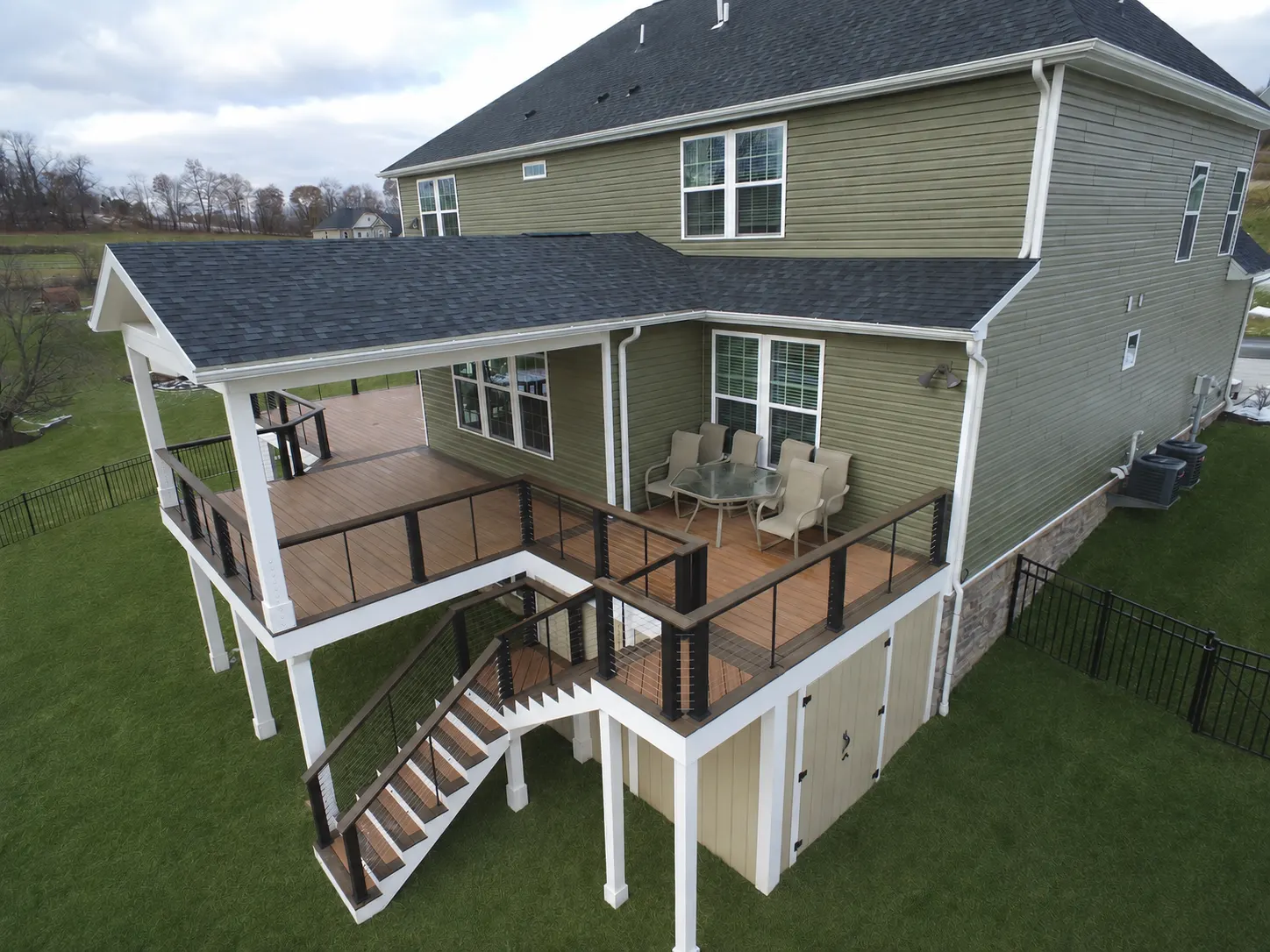
• Build Phase: 4 to 6 weeks for a typical custom deck with a covered roof
Total from approved proposal to project completion: 8 to 10 weeks. Total from first call to sitting on your new deck: plan for 10 to 14 weeks in most cases.
Now here’s what those phases actually look like on the ground in Pittsburgh.

Phase 1: Planning and Design (Approximately 2 Weeks – Pro Tip: You Control This)
The planning and design phase begins the moment you reach out, whether that’s a phone call or a contact form. We respond the same day to learn more about the project. If it’s a good fit, we schedule a site visit within three to five days.
Site visits run one to two hours. That length is intentional. We’re not there to take measurements and disappear. The site visit is where we learn how a family actually uses their outdoor space and whether they entertain large groups or want something more private, perhaps there’s a grade change that affects stairs and access, or if an existing structure needs to come out first. The details that come out in that conversation are what make a proposal accurate and a design worth building. We’ve walked properties in Fox Chapel, Upper St. Clair, Peters Township, and throughout the North Hills where the site itself - the slope, the tree lines, the existing hardscape - changed the entire direction of the design before we ever put a line on paper.
From the site visit, we move into design and proposal development. Using AI-assisted rendering tools, we produce an initial 3D visual of the project within three to five days. If the design requires additional refinement or multiple concept options, we work with a third-party design firm, which adds roughly a week to that timeline. Once the design is right, we deliver a formal proposal with fixed pricing - no open-ended allowances that balloon later.
If you’re trying to understand why two proposals for the same project can look dramatically different in price, we covered that in detail in our post on why deck prices vary so much. The short version: they’re not the same project.
Here’s what most homeowners don’t realize: once we hand you a proposal, the clock is in your hands. Some clients approve within a few days. Others take several weeks or even months. High-ticket projects take time to decide, that’s normal. But if you have a target date in mind, the time you spend deliberating doesn’t move the calendar. It just compresses everything that comes after.
What Slows This Phase Down
The biggest delay in planning is almost always the homeowner working through budget and design decisions. Requests for alternate layouts, scope adjustments, and budget comparisons are common. We’d rather you get it right than move fast and regret a decision. But understand the trade-off: every week spent in design revision is a week that doesn’t exist on the build side of the calendar.
It’s also worth being honest about something else: some homeowners use the design phase to price-shop. They take our proposal which reflects hours of site visit time, design work, and detailed takeoffs and use it to negotiate with other contractors. We understand it. But if you’re genuinely trying to hit a target date, that approach costs you weeks you don’t have to spend.
Phase 2: Pre-Construction (Approximately 4 Weeks)
Once we have an approved proposal and a signed contract, the four-week pre-construction phase begins. This is the phase most homeowners underestimate and the one that surprises them most when timelines shift.
During pre-construction we’re pulling permits, finalizing construction prints, completing the material takeoff, scheduling subcontractors, and getting you into our showroom to make final material selections. Approximately 75 percent of our clients come in person to choose their decking, trim, railing, ceiling, and lighting systems. The others work from samples, research online, or visit a local supply house. Either way, selections need to be locked in before we can order materials and confirm the crew schedule.
Permitting in Pittsburgh: What You Actually Need to Know
This is where Pittsburgh diverges most from the generic national answers you’ll find online. Allegheny County and the surrounding townships operate independently - there’s no unified permitting system, no consistent review timeline, and no guarantee that what worked in one municipality will work the same way in the next one over.
Most of the townships we work in regularly return permits within two to three weeks. We’ve recently had a very smooth experience in Collier Township, including a complex project involving a garage, bathroom addition, and covered patio where our permit package was accepted on the first submission. When a package is professionally prepared and complete, most offices move efficiently.
Other municipalities are more thorough. Mt. Lebanon reviews permit packages with a fine-toothed comb. That’s not a criticism - rigorous review protects homeowners and ensures structural standards are met - but it does mean your timeline needs to account for back-and-forth. The single most important factor in a smooth permit process is the quality of the submission package itself. We do significant legwork before submitting: accurate drawings, complete structural specifications, clear answers to questions the reviewer is likely to ask. A well-prepared package gets approved faster than an incomplete one every time.
When Permits Go Wrong: A Real Example from Scott Township
We had a project in Scott Township that became one of the most difficult permit situations we’ve encountered. The design called for helical piles, a screw-in steel footing system that performs exceptionally well in Pittsburgh’s variable soil conditions and on sloped lots where traditional concrete piers are harder to place. Helical piles carry manufacturer engineering certification through suppliers like Mascore, and they’re code-compliant. But they’re still relatively new to this market, and not every permit reviewer has encountered them.
The permit office in Scott Township was led by a structural engineer who required independent engineered drawings beyond Mascore’s documentation, despite the fact that the piles themselves are pre-engineered products with load ratings specified by the manufacturer. To satisfy the requirement, we had to locate an engineer with specific helical pile experience, not just a general structural engineer, because the calculations involved are product-specific. That engineer pool in Western PA is small. We found someone, but we were on their schedule, not ours.
By the time we had what the township needed, months had passed. The homeowner had lost patience and excitement. The project was cancelled. That’s a real outcome - not a hypothetic alone - and it’s the clearest illustration we have of why Pittsburgh’s permitting environment requires genuine local knowledge, not just a standard permit application workflow.
Helical piles are still the right solution in many situations, we haven’t stopped using them. But on projects where the permit municipality is unfamiliar with the product, we now have that conversation with homeowners upfront and build extra buffer into the pre-construction timeline. That’s the trade-off: the better technical solution sometimes carries more permitting risk than a conventional footing in a market that’s still catching up to it.
When Engineering Gets Involved
Western Pennsylvania’s topography doesn’t trigger engineering requirements for most standard deck projects. Where we see it more often is with retaining walls designed to holdback hillsides, or when a design calls for spanning greater distances between posts to preserve sightlines to the river, to the city skyline, or across a ravine. Those longer spans sometimes require a structural engineering review. When they do, add one to two weeks to the pre-construction timeline.
Material Lead Times in 2026
Standard materials like decking boards, framing lumber, handrails have stabilized since the post-COVID supply disruptions. We’re not experiencing the delays we saw in 2021 and 2022. The major manufacturers have expanded capacity; Deckorators is finishing a new manufacturing plant in Buffalo specifically to serve demand in our region, and the recent acquisition of MoistureShield is part of the same capacity expansion story.
Where lead times still matter is in custom and specialty items, typically anything involving steel or custom metalwork. Spiral stairs, custom privacy screens, and specialty structural beams can add two to four weeks to your material timeline. If your design includes any of these, we identify them at proposal stage and order immediately after contract signing.
Phase 3: The Build (4 to 6 Weeks for a Typical SelectDecks Project)
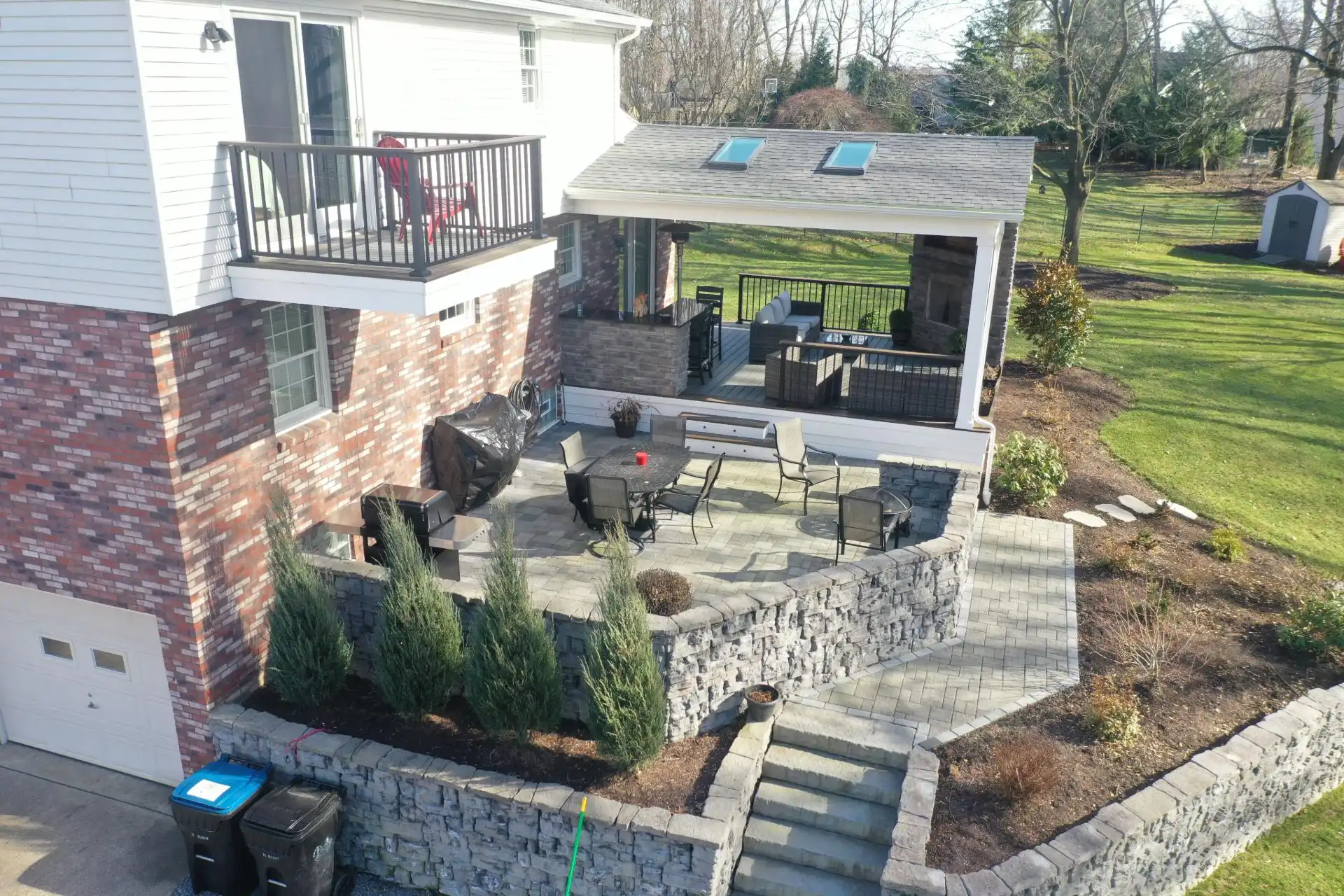
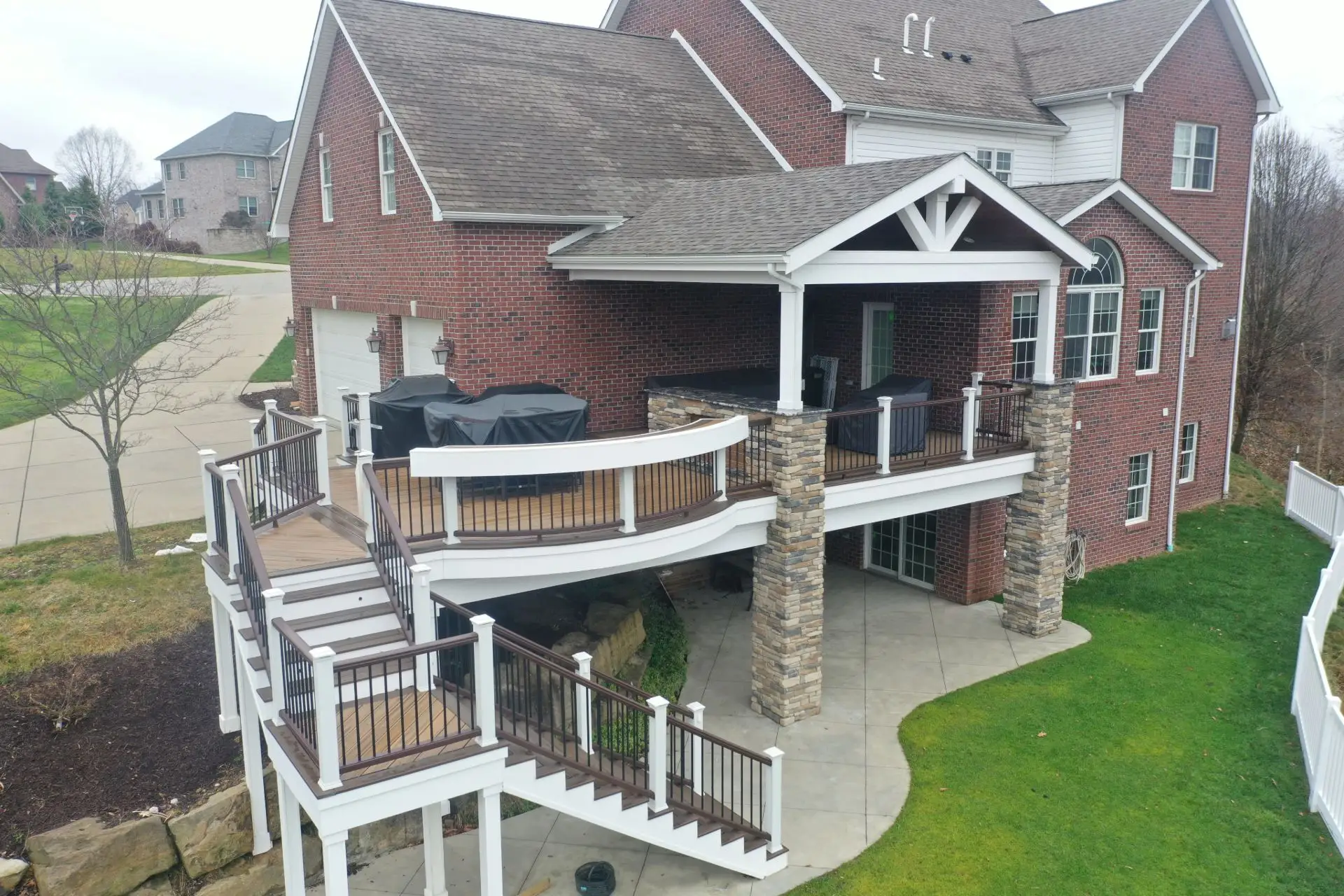
Our most common project is a custom deck with a covered outdoor roof structure — a full outdoor living space, not just a platform. Here’s what the build schedule looks like for that scope:
• Week 1: Demo of any existing structure, site cleanup, layout, and post footings
• Week 2: Deck framing and roof dried in - shingle sinstalled so the structure is weather-protected
• Week 3: Deckorators decking boards installed, handrails set
• Week 4: Synergy ceiling system installed, PlyGem trim work begins
• Week 5: Trim completed, TruScapes lighting fixtures installed and wired
• Week 6: Punch out, final inspections, site cleanup, and final walkthrough with homeowner
Projects with additional scope such as outdoor kitchens, fireplaces, multi-level structures, screened enclosures add time proportional to the complexity. There’s no padding in that schedule. Each phase has to be done correctly before the next one starts, and inspections happen at the points where the township requires sign-off before we proceed.
One thing worth understanding about build timelines across the industry: a contractor who promises a significantly faster schedule isn’t necessarily lying. They may be planning to run your project alongside two or three others simultaneously, moving crews between sites as they wait on inspections or deliveries. That approach can compress a calendar but it introduces coordination risk which is that your project sits idle while the crew is elsewhere, and quality control gets harder when attention is divided. We manage our schedule to keep momentum on each project rather than spreading thin across many.
Pittsburgh Weather Is a Real Factor - Not a Disclaimer
We finished three projects in a single week in late May 2026. All three had started at various points during the winter and beginning in October 2025. The winter of 2025-26 was brutal. We progressed where conditions allowed, but stringing together multiple productive days on site was genuinely difficult. Frozen ground delays footing work. Certain adhesives and sealants have minimum temperature requirements that aren’t suggestions, they’re chemistry. Installing a Synergy ceiling system in sub-freezing temperatures isn’t a good idea regardless of schedule pressure. We’ve seen the results when it’s forced, and they don’t hold up. So we wait for the right conditions and keep moving on what we can.
One of those three winter projects required a specific siding product. The manufacturer doesn’t produce that line during winter months because demand isn’t high enough to justify a production run. We couldn’t get it until spring. That’s not a planning failure; it’s a reality of building in a four-season market that some product lines simply reflect. We kept the homeowner informed throughout and delivered the finished project as soon as conditions and materials allowed.
This spring has brought its own challenges - rain has been persistent, and outdoor construction doesn’t happen in the rain. When weather intervenes, we move to the next project, communicate clearly, and get back on site as soon as conditions allow. If your project starts in September, factor in the possibility of a winter interruption. If it starts in March, the freeze-thaw cycle makes footing work unreliable until the ground stabilizes. These aren’t excuses. They’re the honest reality of building in Western Pennsylvania. We go deeper on seasonal planning in our Pittsburgh winter deck guide if you want the full picture.
Why the Wait Is a Good Sign and Not a Red Flag
Here’s something most contractors won’t tell you: if a builder can start your project next week, that’s worth a hard look. Not because being busy makes a contractor better, but because in this market, the builders who are doing excellent work at a professional level are almost never sitting around waiting for a call.
Think about it from both sides. If you compare two contractors and one can start immediately while the other has a four to six week wait, there’s a reason for both. The contractor with await list has more work than capacity which means homeowners are choosing them over the alternatives, repeatedly, enough to create a backlog. That’s the market telling you something. The contractor who’s available right now may be great. But the question is worth asking: why aren’t they booked?
A wait list also tells you something about how a contractor runs their business. A builder who is honest about their timeline from the very first conversation well before you’ve signed anything, before there’s any money on the table, is showing you exactly how they operate. They’re not telling you what you want to hear to get the job. They’re telling you what’s true so you can plan accordingly. That kind of transparency at the front end of a relationship is a reliable preview of how they’ll communicate when your project hits a permit delay or a weather interruption.
The contractor who tells you what you want to hear to win the job is also the contractor who will tell you what you want to hear when something goes wrong on site. And something always goes wrong on site.
The goal isn’t to find a builder who can start tomorrow. It’s to find a builder who is worth the wait, and then start planning early enough that the wait doesn’t cost you the summer.
What This Means for Your Planning
Reverse-engineer your target date. If you want to be on your new deck by Labor Day, count back 10 to 14weeks. That puts your first call in late May or early June, at the latest. If you want July 4th, you needed to call in March. If you’re reading this in late May hoping for July 4th, the math doesn’t work - regardless of what anyone tells you.
The complete timeline at a glance:
• First call to site visit: 3 to 5 days
• Site visit to proposal: 3 to 5 days (add 1 week for complex design iterations)
• Proposal approval: Homeowner-controlled - days to months
• Pre-construction: Approximately 4 weeks(permitting, prints, materials, scheduling)
• Build phase: 4 to 6 weeks for a custom deck with covered roof
Total from approved proposal to completion: 8 to 10 weeks. Total from first call to finished project: 10 to14 weeks under normal conditions.
Ready to Start Planning?
The best time to start is before you think you need to. By the time most homeowners call, they’re already behind the timeline they had in mind. If you’re thinking about a custom deck or covered outdoor living space in Pittsburgh this year, start the conversation now.
Visit our Pittsburgh outdoor living page to learn more about what we build and how we work, or schedule a discovery call and we’ll walk through the timeline specific to your project, your site, and your target date. No surprises. No missed summers.
Ready to Create Your Dream Outdoor Space? Contact Us Today!